Imagine someone driving home after a party and getting stopped by the police for suspected impaired driving. Depending on the state, they might be charged with DUI or OVI. Many people wonder about the difference between DUI and OVI.
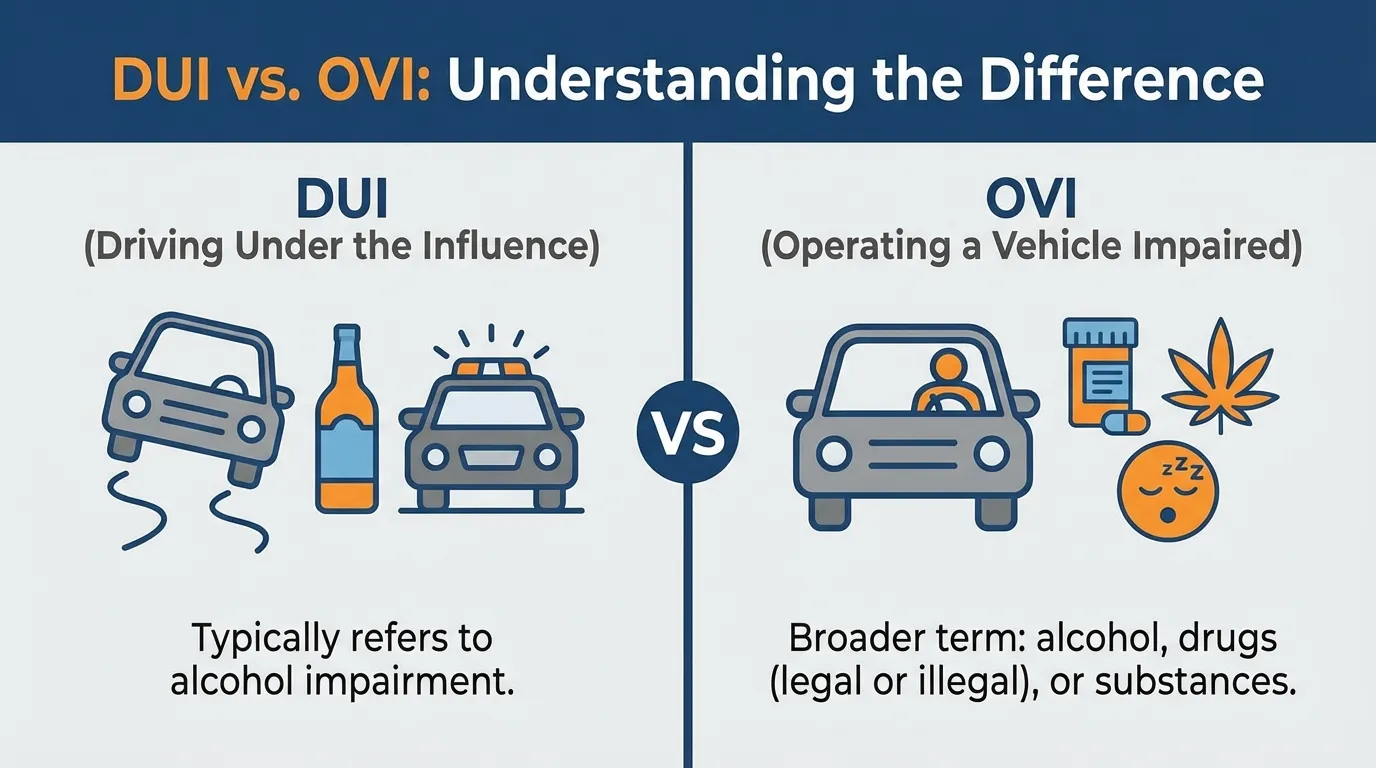
The difference between DUI and OVI primarily lies in terminology and legal definitions used by different states in the U.S. DUI stands for “Driving Under the Influence,” while OVI stands for “Operating a Vehicle Impaired.” Understanding DUI vs OVI is essential for drivers, legal professionals, and law students.
Knowing the difference between DUI and OVI helps individuals understand charges, penalties, and legal processes. Exploring DUI vs OVI ensures responsible driving and informed responses in legal situations.
Key Difference Between the Both
The main difference between DUI and OVI is largely in naming conventions used by states.
DUI is used in most states to describe driving under the influence of alcohol or drugs.
OVI is primarily used in Ohio to describe operating a vehicle while impaired.
In discussions about DUI vs OVI, the distinction lies more in terminology than in the act itself. Both involve impaired operation of a vehicle and carry serious legal consequences.
Why Is Their Difference Necessary to Know for Learners and Experts?
Understanding the difference between DUI and OVI is important for drivers, law students, and legal professionals.
For learners, knowing the difference between DUI and OVI helps avoid confusion about legal charges and penalties. Many search DUI vs OVI to understand state-specific laws.
For experts, understanding the difference between DUI and OVI ensures proper legal advice and representation. Awareness of DUI vs OVI aids in educating the public and enforcing road safety laws effectively.
Pronunciation of the Both (US & UK)
DUI (Driving Under the Influence)
- US: /ˌdi juː ˈaɪ/
- UK: /ˌdi juː ˈaɪ/
OVI (Operating a Vehicle Impaired)
- US: /ˌoʊ vi ˈaɪ/
- UK: /ˌəʊ vi ˈaɪ/
Correct pronunciation helps in discussions of DUI vs OVI in legal contexts and classrooms.
Difference Between the Keywords
1. Definition
DUI refers to driving while impaired by alcohol or drugs.
- Example 1: Driving home after drinking at a bar.
- Example 2: Operating a vehicle after using prescription medication that impairs driving.
OVI refers to operating a vehicle impaired, specific terminology in Ohio.
- Example 1: An Ohio resident driving after consuming alcohol.
- Example 2: Operating a car after taking drugs that affect motor skills.
2. Geographic Usage
DUI is used across most U.S. states.
- Example 1: California charges DUI for impaired driving.
- Example 2: Texas enforces DUI laws for alcohol-related driving offenses.
OVI is primarily used in Ohio.
- Example 1: An Ohio driver is charged with OVI instead of DUI.
- Example 2: Legal forms in Ohio reference OVI laws.
3. Scope of Law
DUI covers both alcohol and drug impairment.
- Example 1: Alcohol blood content exceeds legal limit.
- Example 2: Driving under influence of marijuana.
OVI covers operating a vehicle while impaired, including alcohol, drugs, and prescription medications.
- Example 1: OVI for cannabis use in Ohio.
- Example 2: OVI for prescription painkillers affecting driving.
4. Legal Terminology
DUI = Driving Under the Influence.
- Example 1: Police reports in Florida list DUI charges.
- Example 2: Court documents reference DUI penalties.
OVI = Operating a Vehicle Impaired.
- Example 1: Ohio legal documents use OVI instead of DUI.
- Example 2: Court filings and tickets in Ohio list OVI charges.
5. Penalties
Penalties for DUI can include fines, license suspension, and jail time.
- Example 1: First-time DUI: fine and 6-month license suspension.
- Example 2: Repeat DUI: mandatory alcohol education and jail time.
OVI penalties in Ohio are similar: fines, license suspension, and possible jail.
- Example 1: First OVI offense: probation and fines.
- Example 2: Second OVI offense: extended license suspension and mandatory treatment.
6. Blood Alcohol Content (BAC) Limits
DUI has a BAC legal limit of 0.08% in most states.
- Example 1: 0.08% BAC leads to DUI in New York.
- Example 2: DUI in Florida for BAC over the legal limit.
OVI in Ohio also has a BAC limit of 0.08%.
- Example 1: 0.08% BAC constitutes OVI in Ohio.
- Example 2: Testing for BAC during OVI stops.
7. Arrest Process
DUI arrests follow standard impaired driving procedures.
- Example 1: Field sobriety tests conducted by police.
- Example 2: Breathalyzer used to determine BAC.
OVI arrests follow similar procedures in Ohio.
- Example 1: Ohio police conduct sobriety checkpoints for OVI.
- Example 2: Chemical tests administered for OVI charges.
8. Legal Representation
DUI requires knowledge of state DUI laws.
- Example 1: Hiring a DUI attorney in California.
- Example 2: DUI defense strategies in Texas.
OVI requires familiarity with Ohio OVI laws.
- Example 1: Ohio OVI lawyer consultation.
- Example 2: Legal defense for first-time OVI in Ohio.
9. Court Proceedings
DUI charges are handled in criminal court.
- Example 1: DUI plea negotiations.
- Example 2: DUI trial for repeat offenders.
OVI charges are also criminal offenses in Ohio courts.
- Example 1: OVI court hearings for first offense.
- Example 2: Sentencing for multiple OVI offenses.
10. Public Awareness
DUI awareness campaigns exist nationwide.
- Example 1: “Drive Sober or Get Pulled Over” campaign.
- Example 2: Alcohol awareness programs for drivers.
OVI awareness is targeted in Ohio.
- Example 1: Ohio OVI awareness campaigns in schools.
- Example 2: Public service announcements on OVI penalties.
Nature and Behaviour of Both
DUI behaves as a general impaired driving offense recognized in most states.
OVI behaves as Ohio-specific impaired driving terminology but covers the same scope. Understanding this helps explain the difference between DUI and OVI for drivers and legal practitioners.
Why People Are Confused About Their Use?
| Feature | DUI | OVI | Similarity |
| Geographic | Most U.S. states | Ohio only | Both involve impaired driving |
| Terminology | Driving Under the Influence | Operating Vehicle Impaired | Both are criminal offenses |
| Penalties | Fines, license suspension | Fines, license suspension | Both involve legal consequences |
| Scope | Alcohol & drugs | Alcohol & drugs | Both aim to prevent unsafe driving |
Confusion arises because both involve impaired driving, with only the name differing in some regions.
Which Is Better in What Situation?
The term DUI is better understood nationwide and applies in most states for legal and educational purposes. It’s preferable when discussing impaired driving broadly.
OVI is better used specifically in Ohio, where legal documents, law enforcement, and courts use this terminology. Understanding DUI vs OVI ensures proper context depending on the location.
How the Keywords Are Used in Metaphors and Similes
- “A DUI is like driving with a blindfold on.”
- “An OVI is like operating a car while your judgment is clouded.”
These metaphors explain the risks associated with DUI vs OVI.
Connotative Meaning of Both Keywords
DUI – Negative
Example: “A DUI conviction can affect insurance rates and driving privileges.”
OVI – Negative
Example: “An OVI charge carries serious consequences under Ohio law.”
Idioms or Proverbs Related to the Words
“Don’t drink and drive.” – Applies to both DUI and OVI.
Example: Awareness campaigns emphasize “don’t drink and drive” to prevent accidents.
“Look before you leap.” – Encourages careful decision-making to avoid impaired driving.
Works in Literature Using the Keywords
- Drunk Driving Laws and Society — Nonfiction, John Doe, 2016
- Traffic Safety and the Law — Educational, Jane Smith, 2018
- Legal Implications of DUI — Law, Mark Allen, 2017
Movie Names Related to the Keywords
- Crash — 2004, USA
- The Fast and the Furious — 2001, USA
- Drunk Driving: The Consequences — 2015, USA
These films highlight impaired driving and legal consequences.
Frequently Asked Questions
1. What is the main difference between DUI and OVI?
DUI is used nationwide; OVI is Ohio-specific terminology.
2. Do penalties differ between DUI and OVI?
Penalties are similar, but state laws may vary.
3. Can someone be charged with DUI in Ohio?
Yes, Ohio primarily uses OVI, but DUI may appear in federal cases.
4. Are BAC limits the same for DUI and OVI?
Yes, 0.08% BAC is standard for both.
5. Which term should I use in conversation?
Use DUI for general reference and OVI specifically in Ohio.
How Both Are Useful for Surroundings
Both DUI and OVI laws protect society by discouraging impaired driving. Awareness of DUI vs OVI helps prevent accidents, ensures road safety, and educates drivers about legal consequences.
Final Words for the Both
DUI and OVI are critical legal terms to understand for safe driving and compliance. Knowing the difference between DUI and OVI and comparing DUI vs OVI ensures drivers are informed and responsible.
Conclusion
The difference between DUI and OVI lies mainly in terminology and jurisdiction. While DUI is a general term used nationwide, OVI, on the other hand, is specific to Ohio. Both involve operating a vehicle while impaired, and consequently, carry serious legal consequences.
Understanding the difference between DUI and OVI helps drivers, law students, and professionals navigate legal systems, comply with state laws, and promote road safety. Awareness of DUI vs OVI ultimately supports responsible driving and prevents legal issues.