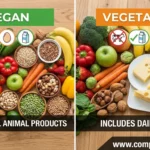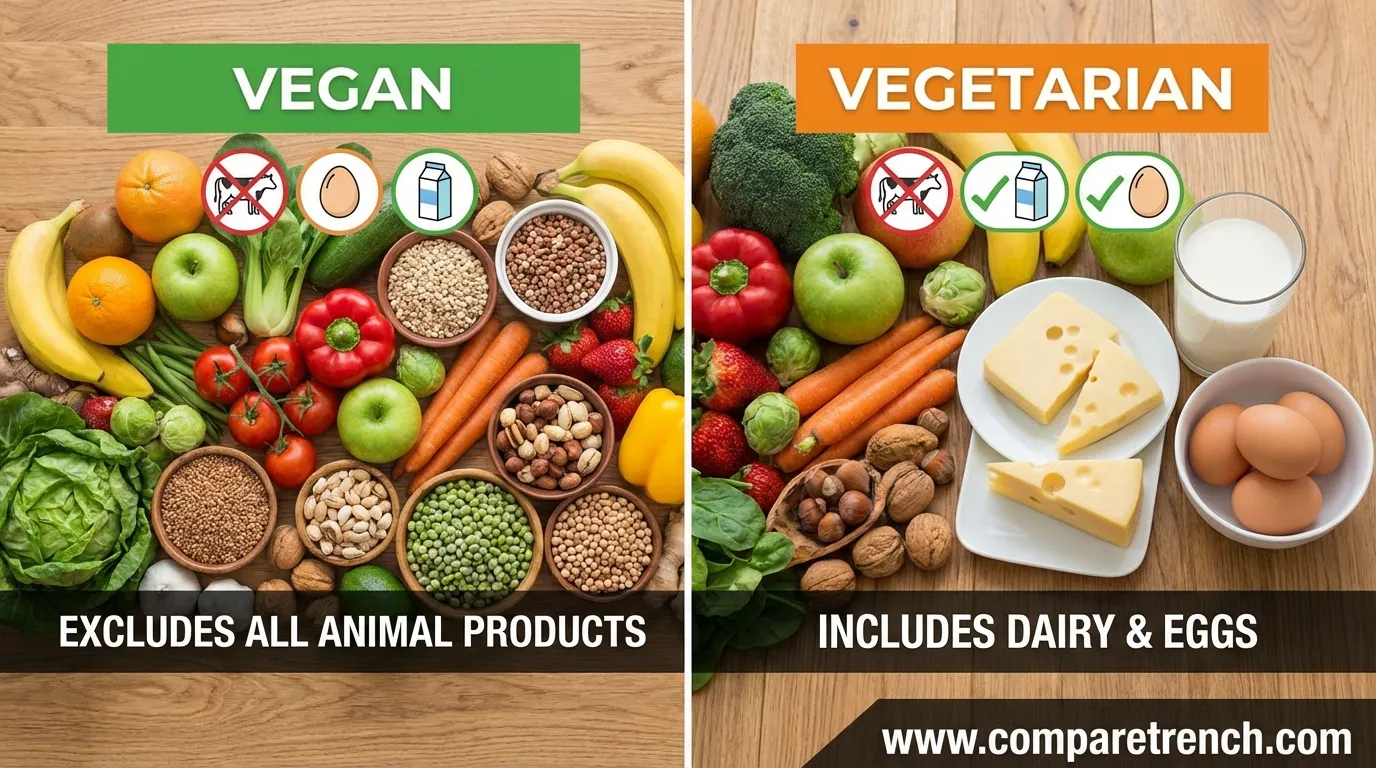
🟩 Featured Snippet: Vegetarians avoid meat but may eat dairy and eggs. Vegans avoid all animal products, including dairy, eggs, and honey.
Imagine you visit a restaurant and see two options: vegan and vegetarian. You may think they are the same, but they are not. This is where the difference between vegan and vegetarian becomes important.
The difference between vegan and vegetarian is about what people choose to eat and avoid. Vegetarians do not eat meat, but they may eat dairy and eggs. Vegans avoid all animal products, including milk, eggs, and even honey.
Understanding the difference between vegan and vegetarian helps you make better food choices. This difference between vegan vs vegetarian also connects to health, ethics, and the environment. Knowing the difference between vegan and vegetarian makes your lifestyle decisions clearer and easier.
Key Difference Between the Both
The main difference between vegan vs vegetarian is the level of restriction.
Vegetarian diet includes some animal products like milk and eggs. Vegan diet excludes all animal-based products.
Both focus on plant-based eating but differ in strictness.
Why Is Their Difference Necessary to Know for Learners and Experts?
Understanding the difference between vegan and vegetarian helps people choose diets that match their values and health goals.
Experts like nutritionists use the difference between vegan vs vegetarian to guide proper diet plans.
In society, knowing the difference between vegan and vegetarian supports better food labeling, health awareness, and ethical choices.
Pronunciation of Both (US & UK)
- Vegan
- US: VEE-gun
- UK: VEE-guhn
- Vegetarian
- US: vej-uh-TAIR-ee-uhn
- UK: vej-uh-TAIR-ee-uhn
Now let’s explore the difference between vegan vs vegetarian in detail.
Difference Between the Keywords
1. Meat Consumption
- Vegan: No meat
- Vegetarian: No meat
- Example (Vegan): Does not eat chicken or fish
- Example (Vegetarian): Also avoids meat
2. Dairy Products
- Vegan: No dairy
- Vegetarian: Can eat dairy
- Example (Vegan): No milk or cheese
- Example (Vegetarian): Drinks milk
3. Eggs
- Vegan: No eggs
- Vegetarian: May eat eggs
- Example (Vegan): Avoids omelets
- Example (Vegetarian): Eats boiled eggs
4. Honey
- Vegan: Avoids honey
- Vegetarian: May consume honey
- Example (Vegan): Uses plant syrup
- Example (Vegetarian): Uses honey
5. Lifestyle Choice
- Vegan: Diet + lifestyle
- Vegetarian: Mostly diet
- Example (Vegan): Avoids leather
- Example (Vegetarian): Focuses on food only
6. Strictness
- Vegan: Very strict
- Vegetarian: Less strict
- Example (Vegan): Checks all ingredients
- Example (Vegetarian): Flexible choices
7. Ethical Focus
- Vegan: Strong animal rights focus
- Vegetarian: Health or religion focus
- Example (Vegan): Avoids animal harm
- Example (Vegetarian): Avoids meat for health
8. Food Variety
- Vegan: Plant-based only
- Vegetarian: Includes dairy/eggs
- Example (Vegan): Eats vegetables, grains
- Example (Vegetarian): Eats cheese pizza
9. Popularity
- Vegan: Growing trend
- Vegetarian: More common
- Example (Vegan): Popular among youth
- Example (Vegetarian): Traditional in many cultures
10. Nutritional Planning
- Vegan: Needs careful planning
- Vegetarian: Easier to manage
- Example (Vegan): Needs vitamin B12
- Example (Vegetarian): Gets nutrients from dairy
Nature and Behaviour of Both
Vegan is strict, ethical, and fully plant-based.
Vegetarian is flexible and easier to follow.
In vegan vs vegetarian, one is complete restriction while the other allows some animal products.
Why People Are Confused About Their Use?
| Aspect | Vegan | Vegetarian | Similarity |
| Diet | No animal products | No meat | Plant-based focus |
| Dairy | Not allowed | Allowed | Healthy eating |
| Eggs | Not allowed | Allowed | Avoid meat |
| Lifestyle | Strict | Flexible | Ethical choice |
Which Is Better in What Situation?
Vegan is better when someone wants a fully plant-based lifestyle and strong ethical stance. It supports animal rights and environmental goals.
Vegetarian is better for beginners or those who want balance. It is easier to maintain while still avoiding meat. In vegan vs vegetarian, the best choice depends on personal goals.
How the Keywords Used in Metaphors and Similes
- Vegan: “Her lifestyle was pure like nature.”
- Vegetarian: “His diet was balanced like a calm river.”
Connotative Meaning
- Vegan: Positive (ethical, strict)
- Example: She follows a vegan lifestyle.
- Vegetarian: Neutral/Positive (balanced)
- Example: He prefers a vegetarian diet.
Idioms or Proverbs
- “As pure as nature” (Vegan idea)
- Example: His vegan choices are as pure as nature.
- “Balanced life” (Vegetarian idea)
- Example: A vegetarian diet supports a balanced life.
Works in Literature
- Eating Animals – Jonathan Safran Foer – 2009 (Non-fiction)
- The China Study – T. Colin Campbell – 2005 (Health/Nutrition)
Movie Names
- What the Health – 2017, USA
- Forks Over Knives – 2011, USA
How Both Are Useful for Surroundings
Vegan diets reduce animal harm and environmental impact.
Vegetarian diets promote health and reduce meat consumption.
Together, vegan vs vegetarian supports a healthier and more sustainable world.
Top 10 Comparison Table
| No | Vegan | Vegetarian |
| 1 | No animal products | No meat |
| 2 | No dairy | Dairy allowed |
| 3 | No eggs | Eggs allowed |
| 4 | Strict | Flexible |
| 5 | Ethical focus | Health focus |
| 6 | Plant-only | Mixed plant/dairy |
| 7 | Harder to follow | Easier |
| 8 | Needs planning | Simple |
| 9 | Lifestyle choice | Diet choice |
| 10 | Growing trend | Traditional |
Final Words for the Both
Vegan is strict and fully plant-based. Vegetarian is flexible and balanced.
Both are healthy choices depending on goals.
Conclusion
The difference between vegan and vegetarian is clear and useful. Vegans avoid all animal products, while vegetarians avoid only meat but may consume dairy and eggs.
In vegan vs vegetarian, both diets promote healthier living and ethical awareness.
Understanding the difference between vegan and vegetarian helps you choose the right lifestyle for your health, values, and environment.
Frequently Asked Questions
1. What is the main difference between vegan and vegetarian?
Vegan avoids all animal products; vegetarian avoids meat only.
2. Can vegetarians eat eggs?
Yes, many vegetarians eat eggs.
3. Is vegan healthier than vegetarian?
Both can be healthy with proper planning.
4. Why do people choose vegan?
For ethical, health, or environmental reasons.
5. Is vegetarian easier than vegan?
Yes, vegetarian is easier to follow.