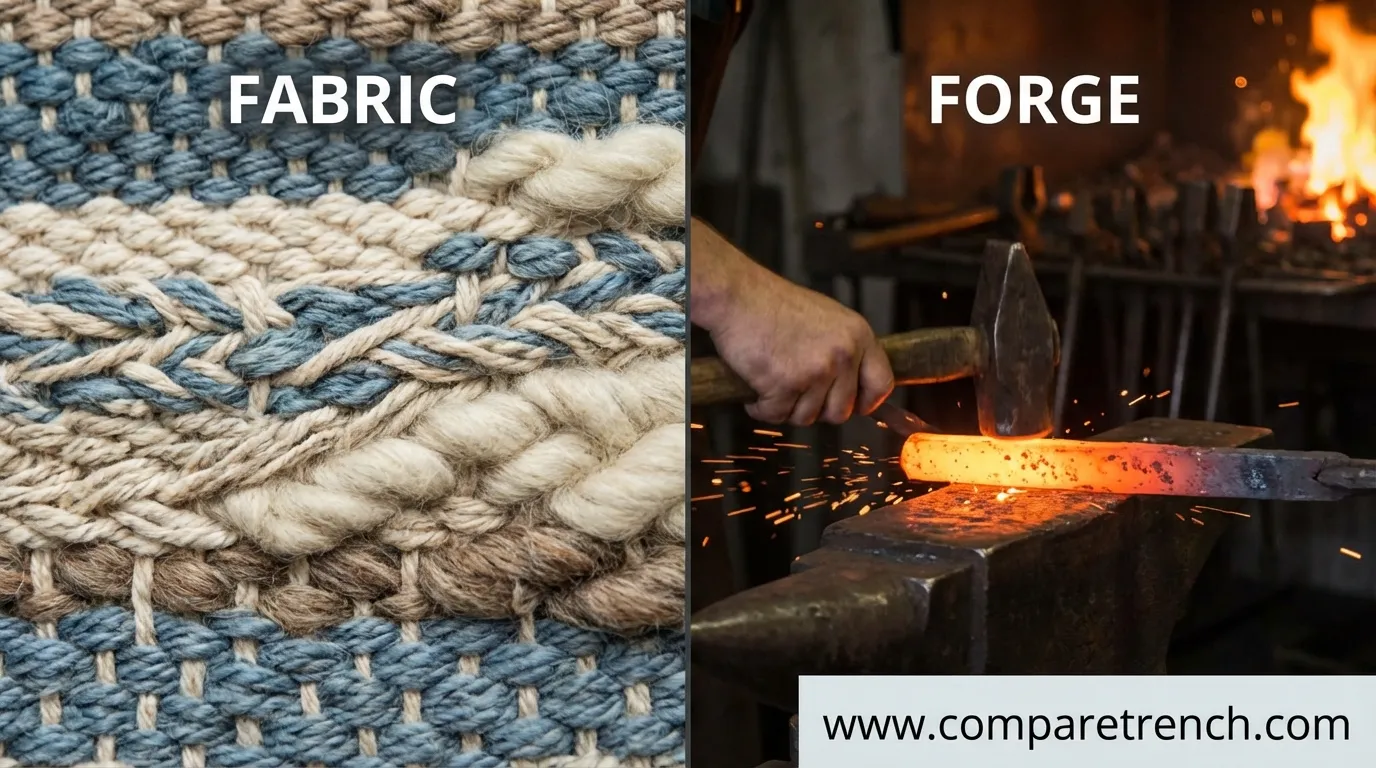
Imagine a blacksmith’s workshop: one person works at a loom, weaving threads into cloth, while another heats metals to create swords and tools. This scenario highlights the difference between fabric and forge.
The difference between fabric and forge lies in material, purpose, and process. Fabric refers to woven or knitted textiles, while forge involves shaping metal using heat and tools. Many students and professionals search for fabric vs forge to understand industrial processes and craftsmanship.
Knowing the difference between fabric and forge is essential for designers, engineers, and hobbyists. Exploring fabric vs forge helps clarify production techniques, materials used, and the end purpose of these creations.
Key Difference Between the Both
The main difference between fabric and forge is that fabric relates to textiles, weaving, and cloth production, whereas forge relates to heating, shaping, and molding metals.
In simple terms, fabric vs forge differs in material type, creation process, and end product, though both involve craftsmanship and skill.
Why Is Their Difference Necessary to Know for Learners and Experts?
Understanding the difference between fabric and forge is important for students, artisans, and engineers.
For learners, knowing the difference between fabric and forge helps in selecting fields like textile design or metallurgy. Many search fabric vs forge to differentiate between creative processes and technical skills.
For experts, understanding the difference between fabric and forge ensures efficient design, production, and material selection. Awareness of fabric vs forge is vital for industrial, fashion, and engineering applications.
Pronunciation of the Both (US & UK)
Fabric
- US: /ˈfæb.rɪk/
- UK: /ˈfæb.rɪk/
Forge
- US: /fɔːrdʒ/
- UK: /fɔːdʒ/
Correct pronunciation aids clear communication in workshops, classrooms, and industrial discussions about fabric vs forge.
Difference Between the Keywords
1. Definition
Fabric refers to woven, knitted, or pressed textile materials.
- Example 1: Cotton fabric used for shirts.
- Example 2: Silk fabric used in dresses.
Forge refers to the process of shaping metal using heat and tools.
- Example 1: Forging a sword from iron.
- Example 2: Blacksmith forging metal gates.
2. Material
Fabric is made from natural or synthetic fibers.
- Example 1: Wool fabric for winter clothing.
- Example 2: Polyester fabric for outdoor gear.
Forge involves metals like iron, steel, and alloys.
- Example 1: Forged steel knife.
- Example 2: Forged iron chains.
3. Process
Fabric is created through weaving, knitting, or felting.
- Example 1: Loom weaving cotton threads.
- Example 2: Knitting yarn into scarves.
Forge involves heating, hammering, and shaping metals.
- Example 1: Hammering hot iron to create a horseshoe.
- Example 2: Heating steel for swordmaking.
4. Purpose
Fabric is used for clothing, upholstery, and textiles.
- Example 1: Making curtains from linen fabric.
- Example 2: Sewing a dress with satin fabric.
Forge is used to produce tools, weapons, and structural elements.
- Example 1: Forging a hammer for construction.
- Example 2: Crafting metal railings.
5. Skill Required
Fabric creation requires textile and sewing skills.
- Example 1: Designing patterned fabric.
- Example 2: Sewing garments from woven cloth.
Forge requires metallurgy and blacksmithing skills.
- Example 1: Controlling heat to shape steel.
- Example 2: Hammering techniques for metal strength.
6. Tools Used
Fabric uses looms, knitting needles, and sewing machines.
- Example 1: Loom for weaving cotton threads.
- Example 2: Sewing machine for stitching fabric.
Forge uses anvils, hammers, tongs, and furnaces.
- Example 1: Anvil for shaping iron.
- Example 2: Furnace to heat metal.
7. Industrial Application
Fabric is central to the textile and fashion industries.
- Example 1: Clothing manufacturing.
- Example 2: Upholstery production.
Forge is crucial in metalworking, construction, and manufacturing.
- Example 1: Making forged gears in factories.
- Example 2: Blacksmith shops producing tools.
8. Durability
Fabric durability varies by fiber type and weave.
- Example 1: Cotton fabric wears faster than denim.
- Example 2: Polyester fabric resists tearing.
Forged metal is extremely durable and long-lasting.
- Example 1: Forged steel blade lasting decades.
- Example 2: Iron gate enduring weather conditions.
9. Aesthetic vs Functional
Fabric often emphasizes aesthetics, patterns, and comfort.
- Example 1: Embroidered fabric for decoration.
- Example 2: Soft silk fabric for luxury clothing.
Forge emphasizes functionality and strength.
- Example 1: Forged tools for heavy labor.
- Example 2: Structural metal components for buildings.
10. Economic Value
Fabric has economic value in textile trade and fashion.
- Example 1: Designer silk fabric sold at high price.
- Example 2: Exporting cotton fabric to other countries.
Forge has value in industrial, defense, and construction sectors.
- Example 1: Forged steel used in bridges.
- Example 2: Custom forged weapons for collectors.
Nature and Behaviour of Both
Fabric behaves as a versatile material used in textiles, emphasizing comfort and aesthetics.
Forge behaves as a metalworking process, emphasizing strength, durability, and functionality. Understanding these distinctions clarifies the difference between fabric and forge.
Why People Are Confused About Their Use?
| Feature | Fabric | Forge | Similarity |
| Material | Fibers | Metals | Both involve craftsmanship |
| Process | Weaving, knitting | Heating, hammering | Both create useful items |
| Purpose | Clothing, textiles | Tools, weapons | Both produce tangible products |
| Skills | Sewing, design | Blacksmithing, metallurgy | Both require specialized skills |
Confusion arises when people mix material types and creation processes, prompting the comparison fabric vs forge.
Which Is Better in What Situation?
Fabric is better for clothing, decoration, and textiles. For example, sewing a dress or upholstering furniture requires fabric.
Forge is better for tools, weapons, and durable objects. For example, forging a steel hammer or metal gate ensures strength and longevity. The choice depends on the material requirement in fabric vs forge scenarios.
How the Keywords Are Used in Metaphors and Similes
- “Fabric is like the skin of a house, covering and protecting it.”
- “Forge is like the heart of a weapon, providing strength and resilience.”
These metaphors explain the functional and material difference between fabric and forge.
Connotative Meaning of Both Keywords
Fabric – Neutral/Positive
Example: “The fabric of society represents connection and interwoven lives.”
Forge – Positive
Example: “Forging new paths symbolizes strength and creation.”
Idioms or Proverbs Related to the Words
“Weave the fabric of your life.” – Emphasizes planning and interconnection.
“Forge ahead.” – Encourages persistence and strength in action.
Works in Literature Using the Keywords
- The Fabric of the Cosmos — Science, Brian Greene, 2004
- Forged in Fire: Blacksmithing Tales — History, John Smith, 2010
- Metal and Material: The Art of Forge — Educational, Jane Doe, 2015
Movie Names Related to the Keywords
- The Fabric of Time — 2018, USA
- Forge of Destiny — 2017, UK
- Iron Forge — 2015, USA
These films explore creation, craftsmanship, and transformation.
Frequently Asked Questions
1. What is the main difference between fabric and forge?
Fabric is a textile material; forge is the process of shaping metal.
2. Can fabric be forged?
No, fabric cannot be forged; metals can only undergo forging.
3. Which requires higher temperature?
Forge requires extreme heat to shape metals; fabric uses no heat.
4. Is fabric or forge more durable?
Forge produces metal objects, which are generally more durable than fabric.
5. Are both used in industrial applications?
Yes, fabric in textiles and forge in metalworking and construction.
How Both Are Useful for Surroundings
Fabric provides clothing, home furnishings, and comfort, while forge produces tools, weapons, and structural materials. Understanding fabric vs forge ensures proper material selection for human needs and industry.
Final Words for the Both
Fabric and forge are essential in human life, one for textiles and the other for metalwork. Knowing the difference between fabric and forge and comparing fabric vs forge clarifies their distinct roles and applications.
Conclusion
The difference between fabric and forge lies in material, process, and purpose. Fabric involves fibers woven or knitted for textiles, while forge involves heating and shaping metals for strength and utility.
Understanding the difference between fabric and forge is important for designers, engineers, artisans, and industrial professionals. Exploring fabric vs forge ensures knowledge of creation techniques, material selection, and proper application.