🟩 Quick Answer:
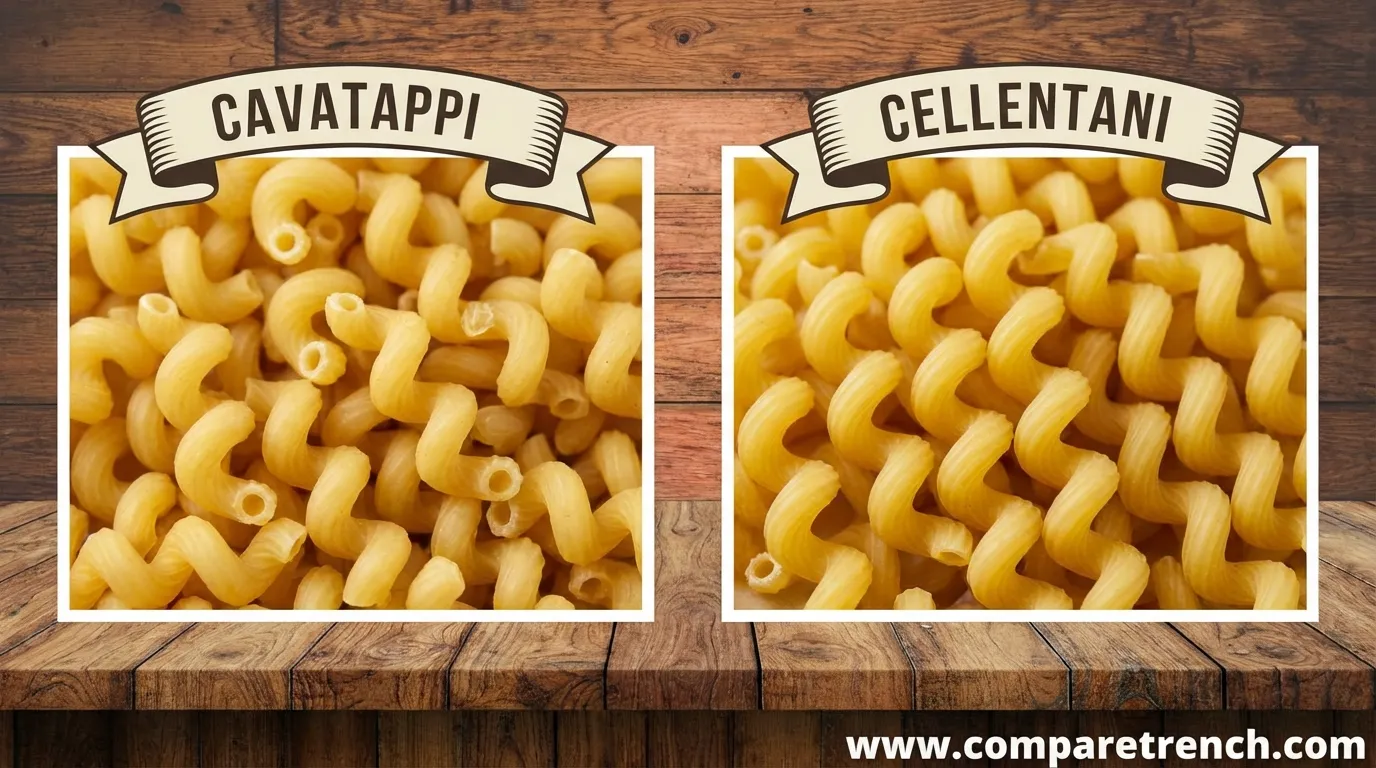
Cavatappi has ridges and open spirals, while cellentani is smoother with tighter curves. 🟦 Simple Tip:
Use cavatappi for thick sauces and cellentani for light dishes
In many kitchens around the world, pasta is more than just food—it is comfort, tradition, and creativity. When I first visited a small family restaurant, I noticed two pasta shapes on the menu: cavatappi and cellentani. They looked almost the same, yet the chef insisted they were different.
The difference between cavatappi and cellentani may seem small, but it matters a lot in cooking. Both are spiral-shaped pasta, often used in creamy dishes and salads. Still, their design, texture, and use can change how a dish tastes and feels.
Understanding the difference between cavatappi and cellentani helps both beginners and experts choose the right pasta. Whether you cook at home or work in a kitchen, knowing the difference between cavatappi and cellentani can improve your meals in simple but powerful ways.
Key Difference Between the Both
The main difference lies in shape and structure. Cavatappi has a more open spiral and ridged surface, while cellentani is tighter and smoother in its curves.
This small variation affects how sauces stick and how the pasta feels when eaten. In short, cavatappi holds thick sauces better, while cellentani gives a softer bite.
Why Is Their Difference Necessary to Know for Learners and Experts?
Knowing pasta types is important in cooking. For learners, it builds basic knowledge and confidence. For experts, it helps create perfect dishes.
The difference between cavatappi and cellentani is not just about shape. It affects cooking time, texture, and presentation. In society, food plays a big role in culture, and using the right pasta shows skill and respect for tradition.
When chefs understand the difference between cavatappi and cellentani vs other pasta, they can match sauces better and improve taste. This knowledge also helps food businesses maintain quality and customer satisfaction.
Pronunciation of the Both (US & UK)
- Cavatappi:
- US: kah-vah-TAH-pee
- UK: ka-va-TAP-ee
- Cellentani:
- US: chel-en-TAH-nee
- UK: chel-en-TAN-ee
Now that you can say them correctly, let’s move deeper into understanding how they differ in real cooking situations.
Difference Between the Keywords
1. Shape
Cavatappi has a corkscrew-like spiral.
Cellentani has a tighter twist.
Examples:
- Cavatappi works well in mac and cheese.
- Cellentani fits better in light pasta salads.
2. Surface Texture
Cavatappi usually has ridges.
Cellentani is smoother.
Examples:
- Ridges help cheese sauce stick.
- Smooth pasta is better for oil-based sauces.
3. Sauce Holding Ability
Cavatappi holds thick sauces well.
Cellentani holds lighter sauces.
Examples:
- Alfredo sauce stays on cavatappi.
- Olive oil dressing suits cellentani.
4. Bite Texture
Cavatappi is firmer.
Cellentani is softer.
Examples:
- Cavatappi gives a chewy feel.
- Cellentani feels gentle when eaten.
5. Cooking Time
Cavatappi takes slightly longer.
Cellentani cooks faster.
Examples:
- Cavatappi needs extra boiling time.
- Cellentani cooks quickly for salads.
6. Visual Appearance
Cavatappi looks bold and open.
Cellentani looks compact.
Examples:
- Cavatappi stands out in dishes.
- Cellentani blends in easily.
7. Origin Naming
Cavatappi means “corkscrew” in Italian.
Cellentani is named after a singer.
Examples:
- Cavatappi reflects shape meaning.
- Cellentani reflects cultural naming.
8. Usage in Recipes
Cavatappi is used in baked dishes.
Cellentani is used in simple recipes.
Examples:
- Baked pasta casseroles use cavatappi.
- Cold pasta salads use cellentani.
9. Popularity
Cavatappi is more common in restaurants.
Cellentani is often found in homes.
Examples:
- Restaurant mac and cheese uses cavatappi.
- Home salads often use cellentani.
10. Flexibility in Cooking
Cavatappi suits heavy meals.
Cellentani suits light meals.
Examples:
- Cavatappi pairs with meat sauces.
- Cellentani pairs with vegetables.
Discuss the Nature and Behaviour of the Both Separately
Cavatappi is strong and bold. It holds its shape well even in thick sauces. It behaves like a sturdy pasta, perfect for rich dishes.
Cellentani is softer and more flexible. It blends easily with ingredients and gives a lighter feel. It behaves like a gentle pasta, ideal for simple meals.
Why People Are Confused About Their Use?
| Feature | Cavatappi | Cellentani | Similarity |
| Shape | Open spiral | Tight spiral | Both spiral |
| Texture | Ridged | Smooth | Both firm |
| Use | Heavy dishes | Light dishes | Both versatile |
| Look | Bold | Compact | Both attractive |
People get confused because both look alike at first glance. The difference between cavatappi and cellentani vs other pasta shapes is subtle but important.
Which Is Better in What Situation?
Cavatappi is better for heavy meals. It works best in baked pasta and creamy sauces. Its ridges help hold thick flavors, making every bite rich and full.
Cellentani is better for light meals. It is perfect for salads and simple dishes. Its smooth texture makes it easy to mix with vegetables and light dressings.
How the Keywords Used in Metaphors and Similes
People sometimes compare twists in life to pasta shapes.
- “Life twists like cavatappi” means life is complex.
- “Smooth like cellentani” means something is easy and calm.
These comparisons show how food words enter daily language.
Connotative Meaning of Both the Keywords
- Cavatappi:
- Positive: richness, strength
- Neutral: spiral pasta
- Negative: heavy or complex
Example:
- “The plan is like cavatappi—twisted but strong.”
- Cellentani:
- Positive: simplicity, smoothness
- Neutral: pasta shape
- Negative: plain or basic
Example:
- “Her work is like cellentani—simple but neat.”
Idioms or Proverbs Related to the Words
These pasta names are not common in idioms, but similar ideas exist.
- “Twist and turn like pasta”
- Example: His story twists like cavatappi.
- “Keep it simple”
- Example: Her cooking is like cellentani—simple and clean.
Works in Literature
- The Geometry of Pasta – Food Writing – Jacob Kenedy – 2010
- Pasta by Design – Culinary Art – George L. Legendre – 2014
Movie Names Made on Keywords
- No direct movies named cavatappi or cellentani exist, but pasta appears in:
- Big Night – 1996 – USA
- Eat Pray Love – 2010 – USA
How Both Are Useful for Surroundings
Both pasta types help in food creativity. They support cooking industries and home kitchens.
They also bring people together. Meals made with cavatappi or cellentani often become part of family time and social gatherings.
Top 10 Comparison Table
| Point | Cavatappi | Cellentani |
| Shape | Open spiral | Tight spiral |
| Texture | Ridged | Smooth |
| Cooking Time | Longer | Shorter |
| Sauce | Thick | Light |
| Use | Baked dishes | Salads |
| Bite | Firm | Soft |
| Look | Bold | Compact |
| Origin | Shape-based | Name-based |
| Popularity | High | Moderate |
| Flexibility | Heavy meals | Light meals |
Final Words for the Both
Cavatappi and cellentani may look alike, but they serve different purposes. Choosing the right one can improve taste and presentation.
Understanding cavatappi vs cellentani helps you cook smarter and enjoy food more.
Conclusion
The difference between cavatappi and cellentani is simple but meaningful. From shape to texture, each type has its own role in cooking.
Cavatappi is bold and perfect for rich dishes, while cellentani is smooth and ideal for light meals. Knowing their differences helps both beginners and experts create better food.
In daily life, small details like pasta shape can make a big difference. By learning these details, you can improve your cooking skills and enjoy meals more. Whether you choose cavatappi vs cellentani, the key is to match the pasta with the right dish.
Frequently Asked Questions
1. What is the main difference between cavatappi and cellentani?
Cavatappi has ridges and open spirals, while cellentani is smoother and tighter.
2. Which pasta is better for mac and cheese?
Cavatappi is better because it holds cheese sauce well.
3. Are cavatappi and cellentani the same?
No, they are similar but not exactly the same.
4. Can I replace one with the other?
Yes, but the texture and taste may change slightly.
5. Why do people confuse them?
Because both have spiral shapes and look alike at first glance.