In everyday life, relationships sometimes face misunderstandings and emotional conflicts. Imagine two siblings who stop talking after a serious argument. After some time, one of them decides to let go of anger and bitterness. This moment often raises an important question about the difference between forgiveness and reconciliation.
The difference between forgiveness and reconciliation is something many people struggle to understand. While forgiveness means releasing resentment and choosing inner peace, reconciliation involves rebuilding trust and restoring the relationship. In discussions about relationships, people often compare forgiveness vs reconciliation to understand how emotional healing works.
Knowing the difference between forgiveness and reconciliation helps people deal with conflicts in a healthier way. Sometimes a person may forgive but still choose distance. This is why experts often explain forgiveness vs reconciliation separately. When people clearly understand the difference between forgiveness and reconciliation, they can protect their emotional well-being while making wise relationship decisions.
Key Difference Between the Both
The main difference between forgiveness and reconciliation lies in their purpose.
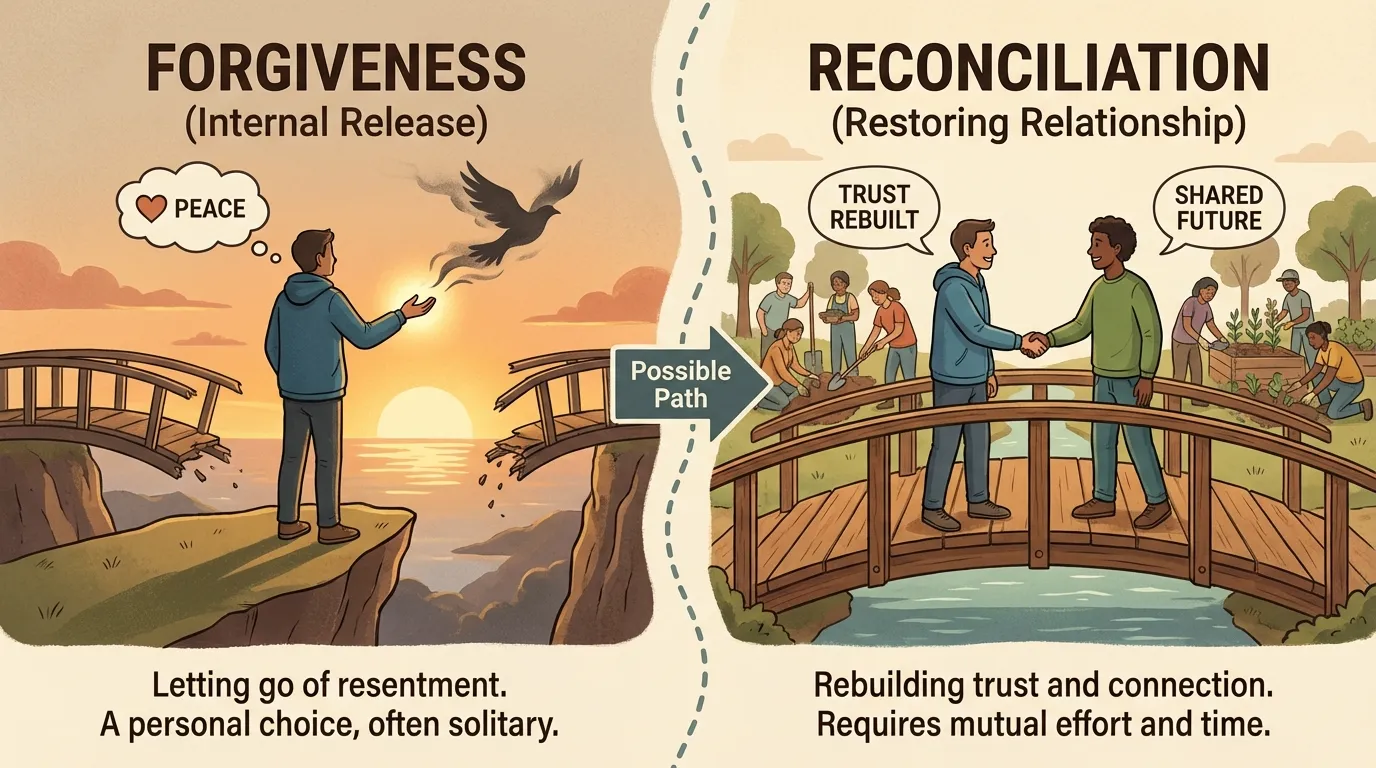
Forgiveness is a personal emotional decision where someone chooses to release anger, resentment, or bitterness toward another person.
Reconciliation, however, involves rebuilding the relationship after conflict. It requires communication, accountability, and effort from both sides.
In the discussion of forgiveness vs reconciliation, the simple idea is this: forgiveness heals the heart, while reconciliation restores the relationship.
Why Is Their Difference Necessary to Know for Learners and Experts?
Understanding the difference between forgiveness and reconciliation is essential for emotional intelligence and healthy relationships.
For learners, knowing the difference between forgiveness and reconciliation helps them realize that forgiveness does not always mean reconnecting with someone. This understanding makes the topic of forgiveness vs reconciliation easier to apply in real-life situations.
For professionals such as counselors and psychologists, the difference between forgiveness and reconciliation is important when guiding people through emotional healing. In society, discussions about forgiveness vs reconciliation promote healthier communication, empathy, and conflict resolution.
Overall, understanding the difference between forgiveness and reconciliation allows people to maintain both emotional peace and personal boundaries.
Pronunciation of the Both (US & UK)
Forgiveness
- US: /fɔːrˈɡɪvnəs/
- UK: /fəˈɡɪvnəs/
Reconciliation
- US: /ˌrɛkənˌsɪliˈeɪʃən/
- UK: /ˌrɛkənˌsɪliˈeɪʃən/
Before exploring the deeper difference between forgiveness and reconciliation, understanding pronunciation helps readers discuss topics like forgiveness vs reconciliation more confidently in conversations and academic discussions.
Difference Between the Keywords
1. Meaning
Forgiveness means letting go of anger toward someone who caused harm.
Example 1: A friend forgives another friend for breaking a promise.
Example 2: A person forgives a coworker for a misunderstanding.
Reconciliation means restoring the relationship.
Example 1: Two friends talk and rebuild their friendship.
Example 2: Family members reconnect after resolving conflict.
This point highlights the difference between forgiveness and reconciliation.
2. Requirement of People
Forgiveness can happen individually.
Example 1: A person forgives someone who never apologized.
Example 2: Someone finds peace by forgiving silently.
Reconciliation requires both individuals.
Example 1: Two coworkers discuss their issue openly.
Example 2: A couple rebuilds trust together.
This is an important idea when discussing forgiveness vs reconciliation.
3. Emotional Process
Forgiveness focuses on inner emotional healing.
Example 1: Letting go of resentment after betrayal.
Example 2: Choosing peace over anger.
Reconciliation focuses on relationship repair.
Example 1: Restoring communication after conflict.
Example 2: Rebuilding trust between partners.
4. Responsibility
Forgiveness does not always require an apology.
Example 1: Someone forgives even without closure.
Example 2: A person forgives for personal peace.
Reconciliation often requires acknowledgment of mistakes.
Example 1: A friend apologizes sincerely.
Example 2: A partner accepts responsibility.
This explains another difference between forgiveness and reconciliation.
5. Control
Forgiveness is within personal control.
Example 1: A person decides to forgive for emotional relief.
Example 2: Someone chooses compassion over anger.
Reconciliation depends on both people.
Example 1: Both friends agree to rebuild trust.
Example 2: A couple decides to continue their relationship.
6. Goal
The goal of forgiveness is emotional freedom.
Example 1: Reducing stress and resentment.
Example 2: Achieving inner peace.
The goal of reconciliation is restoring the relationship.
Example 1: Rebuilding friendship.
Example 2: Restoring family harmony.
7. Possibility
Forgiveness can occur without contact.
Example 1: Forgiving someone who moved away.
Example 2: Letting go of past hurt.
Reconciliation requires interaction.
Example 1: Meeting to discuss the issue.
Example 2: Communicating to rebuild trust.
8. Time Factor
Forgiveness may occur quickly or gradually.
Example 1: Forgiving after reflection.
Example 2: Emotional healing over time.
Reconciliation usually takes longer.
Example 1: Slowly rebuilding trust.
Example 2: Gradually restoring communication.
This comparison is often discussed in forgiveness vs reconciliation topics.
9. Risk Level
Forgiveness involves emotional release.
Example 1: Letting go of anger.
Example 2: Choosing compassion.
Reconciliation may involve risk.
Example 1: Giving someone another chance.
Example 2: Rebuilding a fragile relationship.
10. Relationship Outcome
Forgiveness does not guarantee a renewed relationship.
Example 1: Forgiving but maintaining distance.
Example 2: Letting go and moving forward separately.
Reconciliation leads to restored connection.
Example 1: Friends becoming close again.
Example 2: Family relationships healing.
This final comparison summarizes the difference between forgiveness and reconciliation.
Nature and Behaviour of Both
Forgiveness is mainly an internal emotional process. It helps individuals release anger and regain emotional balance.
Reconciliation is a relational process that requires trust, communication, and cooperation. Understanding this nature explains the deeper difference between forgiveness and reconciliation often discussed in forgiveness vs reconciliation debates.
Why People Are Confused About Their Use?
| Feature | Forgiveness | Reconciliation | Similarity |
| Purpose | Emotional healing | Relationship restoration | Both resolve conflict |
| Requirement | One person | Two people | Both involve empathy |
| Outcome | Inner peace | Restored relationship | Both promote harmony |
| Process | Personal decision | Mutual effort | Both encourage understanding |
People often confuse these ideas because discussions about forgiveness vs reconciliation show that both are connected to conflict resolution.
Which Is Better in What Situation?
Forgiveness is better when a person wants emotional peace but the relationship cannot safely continue. For example, after repeated betrayal or toxic behavior, forgiveness allows someone to move forward without carrying resentment. In such cases, understanding the difference between forgiveness and reconciliation helps people maintain healthy boundaries.
Reconciliation is better when both individuals are willing to admit mistakes and rebuild trust. In situations where the relationship is valuable and both sides are committed to change, reconciliation can strengthen bonds. This is why discussions about forgiveness vs reconciliation often emphasize mutual effort and accountability.
How the Keywords Are Used in Metaphors and Similes
These words are sometimes used metaphorically.
Examples:
- “Forgiveness is like cleaning a wound so it can heal.”
- “Reconciliation is like rebuilding a broken bridge.”
These comparisons help illustrate the difference between forgiveness and reconciliation in a simple and relatable way.
Connotative Meaning of Both Keywords
Forgiveness – Positive
Example:
“Forgiveness shows emotional strength and maturity.”
Reconciliation – Positive
Example:
“Reconciliation reflects trust and renewed connection.”
Both terms usually carry positive emotional meanings in discussions about forgiveness vs reconciliation.
Idioms or Proverbs Related to the Words
Forgive and forget
Example:
After their disagreement, they decided to forgive and forget.
Bury the hatchet
Example:
The neighbors finally buried the hatchet and restored peace.
Works in Literature Using the Keywords
- The Sunflower: On the Possibilities and Limits of Forgiveness — Philosophy/Memoir, Simon Wiesenthal, 1969
- Forgiveness and Reconciliation: Theory and Application — Psychology, Everett Worthington, 2006
- The Book of Forgiving — Nonfiction, Desmond Tutu, 2014
Movie Names Related to the Keywords
- Dead Man Walking — 1995, USA
- Invictus — 2009, USA
- The Shack — 2017, USA
These films explore emotional healing and themes similar to forgiveness vs reconciliation.
Frequently Asked Questions
1. What is the main difference between forgiveness and reconciliation?
The difference between forgiveness and reconciliation is that forgiveness is a personal emotional act, while reconciliation rebuilds the relationship.
2. Can forgiveness happen without reconciliation?
Yes, forgiveness can happen without restoring the relationship.
3. Does reconciliation require forgiveness?
In most cases, reconciliation begins with forgiveness.
4. Why do people confuse forgiveness vs reconciliation?
People confuse them because both involve healing and resolving conflict.
5. Which one is more important?
Both are important, but forgiveness is essential for inner peace, while reconciliation depends on the situation.
How Both Are Useful for Surroundings
Forgiveness helps reduce anger, resentment, and emotional stress within individuals.
Reconciliation strengthens relationships and promotes harmony within families, communities, and workplaces. Understanding the difference between forgiveness and reconciliation helps societies build healthier and more compassionate connections.
Final Words for the Both
Forgiveness and reconciliation are powerful tools for emotional growth. While forgiveness heals the heart, reconciliation rebuilds trust between people.
Understanding the difference between forgiveness and reconciliation and recognizing the balance between forgiveness vs reconciliation allows individuals to make wiser decisions in relationships.
Conclusion
The difference between forgiveness and reconciliation lies in their purpose and process. Forgiveness is an internal decision to release anger and resentment, while reconciliation focuses on rebuilding a damaged relationship.
When people clearly understand the difference between forgiveness and reconciliation, they can respond to conflicts more wisely. Sometimes forgiveness alone brings peace, while other situations may require reconciliation to restore trust. By understanding forgiveness vs reconciliation, individuals can protect their emotional well-being and create healthier relationships in their personal and social lives.