Imagine someone buying a beautiful ring from a jewelry shop. At first glance, the ring shines brightly and looks like pure gold. However, later they discover that the ring is actually made of brass. Situations like this often lead people to wonder about the difference between brass and gold.
The difference between brass and gold is important because both metals can look very similar in color and shine. Many beginners struggle to identify them, which is why people often search for brass vs gold comparisons. Although they may appear alike, their composition, value, and uses are very different.
Understanding the difference between brass and gold helps consumers make better choices when buying jewelry, decorations, or metal products. Discussions about brass vs gold are common in jewelry markets and manufacturing industries. When people clearly know the difference between brass and gold, they can avoid confusion and understand the true value of the metal they are using.
Key Difference Between the Both
The main difference between brass and gold lies in their composition and value.
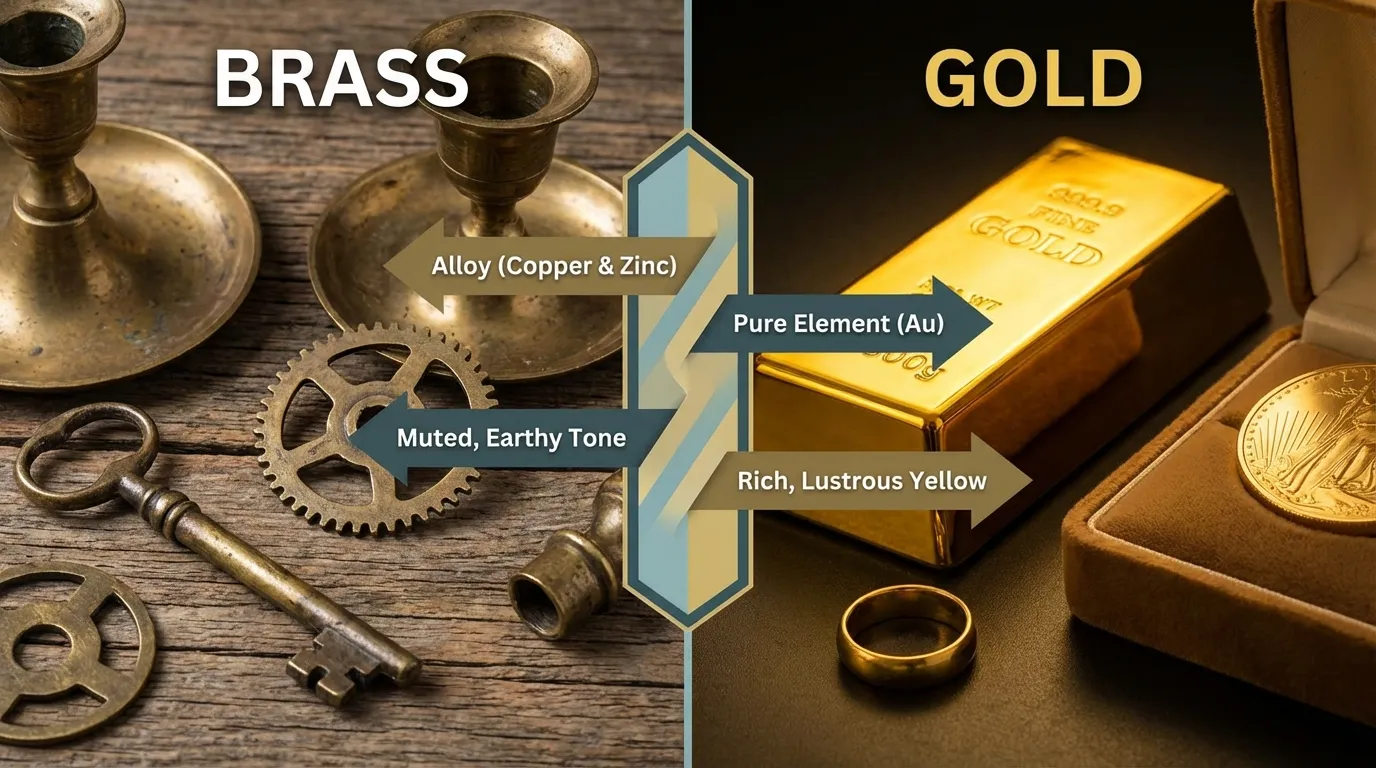
Brass is an alloy made from copper and zinc. It is a manufactured metal created by combining two different metals.
Gold, on the other hand, is a naturally occurring precious metal found in the earth. It is rare and highly valuable.
In simple discussions about brass vs gold, brass is considered an inexpensive alloy, while gold is a valuable and precious metal.
Why Is Their Difference Necessary to Know for Learners and Experts?
Understanding the difference between brass and gold is important for both beginners and professionals.
For learners, knowing the difference between brass and gold helps them identify metals correctly and avoid confusion when buying jewelry or decorative items. Many people search for brass vs gold comparisons when they want to know whether a product is genuine or imitation.
For experts such as jewelers, engineers, and metalworkers, the difference between brass and gold is essential because each metal has different properties and uses. In society, discussions about brass vs gold help protect consumers from fraud and ensure fair trade in the jewelry market.
Overall, learning the difference between brass and gold improves knowledge about materials and their value.
Pronunciation of the Both (US & UK)
Brass
- US: /bræs/
- UK: /brɑːs/
Gold
- US: /ɡoʊld/
- UK: /ɡəʊld/
Before exploring the deeper difference between brass and gold, understanding pronunciation helps readers confidently discuss topics like brass vs gold in daily conversations and educational contexts.
Difference Between the Keywords
1. Composition
Brass is an alloy made from copper and zinc.
Example 1: Manufacturers mix copper and zinc to produce brass.
Example 2: Brass products often contain varying percentages of both metals.
Gold is a natural element found in nature.
Example 1: Gold is mined from the earth.
Example 2: Pure gold exists as a chemical element.
This explains a major difference between brass and gold.
2. Value
Brass is relatively inexpensive.
Example 1: Brass jewelry is affordable for many people.
Example 2: Decorative items made of brass cost less than gold items.
Gold is very valuable.
Example 1: Gold jewelry is considered a luxury item.
Example 2: Gold is often used for investment and savings.
This difference is often discussed in brass vs gold comparisons.
3. Color Appearance
Brass has a yellowish-gold color.
Example 1: Brass musical instruments have a golden shine.
Example 2: Brass decorations may resemble gold.
Gold has a rich, bright yellow color.
Example 1: Gold jewelry shines naturally.
Example 2: The color of gold remains consistent over time.
4. Density
Brass is lighter compared to gold.
Example 1: A brass ring feels lighter in the hand.
Example 2: Brass objects are easier to carry.
Gold is much heavier.
Example 1: A gold coin feels dense and solid.
Example 2: Gold jewelry has noticeable weight.
This is another physical difference between brass and gold.
5. Durability
Brass is strong but can tarnish over time.
Example 1: Brass may develop a dull surface after exposure to air.
Example 2: Brass items sometimes require polishing.
Gold is highly resistant to corrosion.
Example 1: Gold jewelry keeps its shine for many years.
Example 2: Pure gold does not rust or tarnish easily.
6. Usage
Brass is commonly used in industrial and decorative items.
Example 1: Brass is used in musical instruments.
Example 2: Brass is used for door handles and hardware.
Gold is used mainly for jewelry and investments.
Example 1: Gold necklaces and rings are popular worldwide.
Example 2: Gold bars are stored as financial assets.
This usage difference often appears in brass vs gold discussions.
7. Electrical Conductivity
Brass conducts electricity moderately.
Example 1: Brass connectors are used in electronics.
Example 2: Brass components appear in electrical fittings.
Gold is an excellent conductor.
Example 1: Gold plating is used in electronic circuits.
Example 2: Gold connectors improve reliability in devices.
8. Rarity
Brass is easily manufactured.
Example 1: Factories can produce brass in large quantities.
Example 2: Brass is widely available in markets.
Gold is rare in nature.
Example 1: Gold mining requires significant resources.
Example 2: Limited supply increases gold’s value.
9. Maintenance
Brass requires occasional cleaning.
Example 1: Brass statues need polishing.
Example 2: Brass ornaments may darken with time.
Gold requires minimal maintenance.
Example 1: Gold jewelry keeps its shine naturally.
Example 2: Gold rarely needs frequent polishing.
10. Investment Value
Brass has little investment value.
Example 1: Brass items are usually bought for decoration.
Example 2: Brass is not used for financial savings.
Gold is a major investment metal.
Example 1: Investors buy gold bars.
Example 2: Gold is traded in global markets.
This final point summarizes the difference between brass and gold.
Nature and Behaviour of Both
Brass behaves as a practical industrial metal. It is durable, versatile, and widely used in manufacturing and decorative products.
Gold behaves as a precious and stable metal. Its rarity, beauty, and resistance to corrosion make it valuable for jewelry, electronics, and financial investment. This nature explains the deeper difference between brass and gold often discussed in brass vs gold comparisons.
Why People Are Confused About Their Use?
| Feature | Brass | Gold | Similarity |
| Color | Yellowish metal | Rich yellow metal | Both look similar |
| Usage | Decorations, instruments | Jewelry, investment | Both used in ornaments |
| Durability | Strong but tarnishes | Highly resistant | Both long-lasting |
| Appearance | Gold-like shine | Natural gold shine | Both shiny metals |
People often confuse brass vs gold because both metals have a similar golden appearance.
Which Is Better in What Situation?
Brass is better for everyday decorative or functional items because it is strong and affordable. Manufacturers use brass in musical instruments, household hardware, and decorative pieces. Its durability and lower cost make it suitable for large-scale production.
Gold is better for jewelry, luxury items, and financial investment. Because of its rarity and resistance to corrosion, gold maintains its beauty and value over time. In discussions about brass vs gold, gold is usually preferred when long-term value and prestige are important.
How the Keywords Are Used in Metaphors and Similes
These metals sometimes appear in creative comparisons.
Examples:
- “Her necklace shone like gold in the sunlight.”
- “The old instrument had the warm glow of brass.”
Such metaphors highlight visual aspects related to the difference between brass and gold.
Connotative Meaning of Both Keywords
Brass – Neutral
Example:
“Brass decorations give a classic vintage look.”
Gold – Positive
Example:
“Gold symbolizes wealth, success, and luxury.”
Idioms or Proverbs Related to the Words
“All that glitters is not gold.”
Example:
The ring looked valuable, but it was brass—proving that all that glitters is not gold.
“Heart of gold.”
Example:
She helped everyone in need because she had a heart of gold.
Works in Literature Using the Keywords
- Heart of Gold — Fiction, Sharon Shinn, 2008
- The Golden Compass — Fantasy, Philip Pullman, 1995
- The Brass Verdict — Crime/Legal Thriller, Michael Connelly, 2008
Movie Names Related to the Keywords
- Gold — 2016, USA
- The Brass Teapot — 2012, USA
- City of Gold — 2015, USA
These films include themes or symbolism related to metals and wealth.
Frequently Asked Questions
1. What is the main difference between brass and gold?
The difference between brass and gold is that brass is an alloy of copper and zinc, while gold is a natural precious metal.
2. Can brass look like gold?
Yes, brass has a golden color, which is why many people compare brass vs gold.
3. Which metal is more valuable?
Gold is much more valuable because it is rare and widely used for investment.
4. Does brass tarnish?
Yes, brass can tarnish over time, while gold remains shiny.
5. How can people tell brass vs gold apart?
People can check weight, value, and resistance to tarnish to identify the difference between brass and gold.
How Both Are Useful for Surroundings
Brass and gold both contribute to everyday life in different ways. Brass supports industries by being used in tools, instruments, and hardware.
Gold supports technology, jewelry industries, and financial systems. Understanding the difference between brass and gold helps people appreciate how these metals serve different purposes in society.
Final Words for the Both
Brass and gold may look similar at first glance, but they are very different in composition, value, and use.
Understanding the difference between brass and gold and comparing brass vs gold helps people recognize the true nature of these metals and make informed choices.
Conclusion
The difference between brass and gold mainly lies in their composition, value, and physical properties. Brass is an alloy made from copper and zinc, while gold is a rare and valuable natural metal.
By understanding the difference between brass and gold, people can easily identify these metals and avoid confusion when purchasing jewelry or decorative items. Discussions about brass vs gold highlight how each metal plays an important role in industry, culture, and everyday life.