Imagine walking into a nightclub for the first time. The lights are flashing, the crowd is dancing, and a powerful electronic beat fills the room. For many people, it all sounds similar at first. But for DJs and music fans, there is a clear difference between house and techno that defines the mood of the entire dance floor.
The difference between house and techno is one of the most discussed topics in electronic music. While both genres belong to the world of electronic dance music, they have unique rhythms, styles, and cultural origins. Many beginners often search for house vs techno comparisons to understand how these two genres create different experiences in clubs and festivals.
Understanding the difference between house and techno helps listeners appreciate the music more deeply. DJs, producers, and fans often debate house vs techno because each genre carries its own history, sound design, and emotional energy. When people learn the difference between house and techno, they begin to notice how these beats shape nightlife culture around the world.
Key Difference Between the Both
The main difference between house and techno lies in their rhythm, structure, and emotional feel.
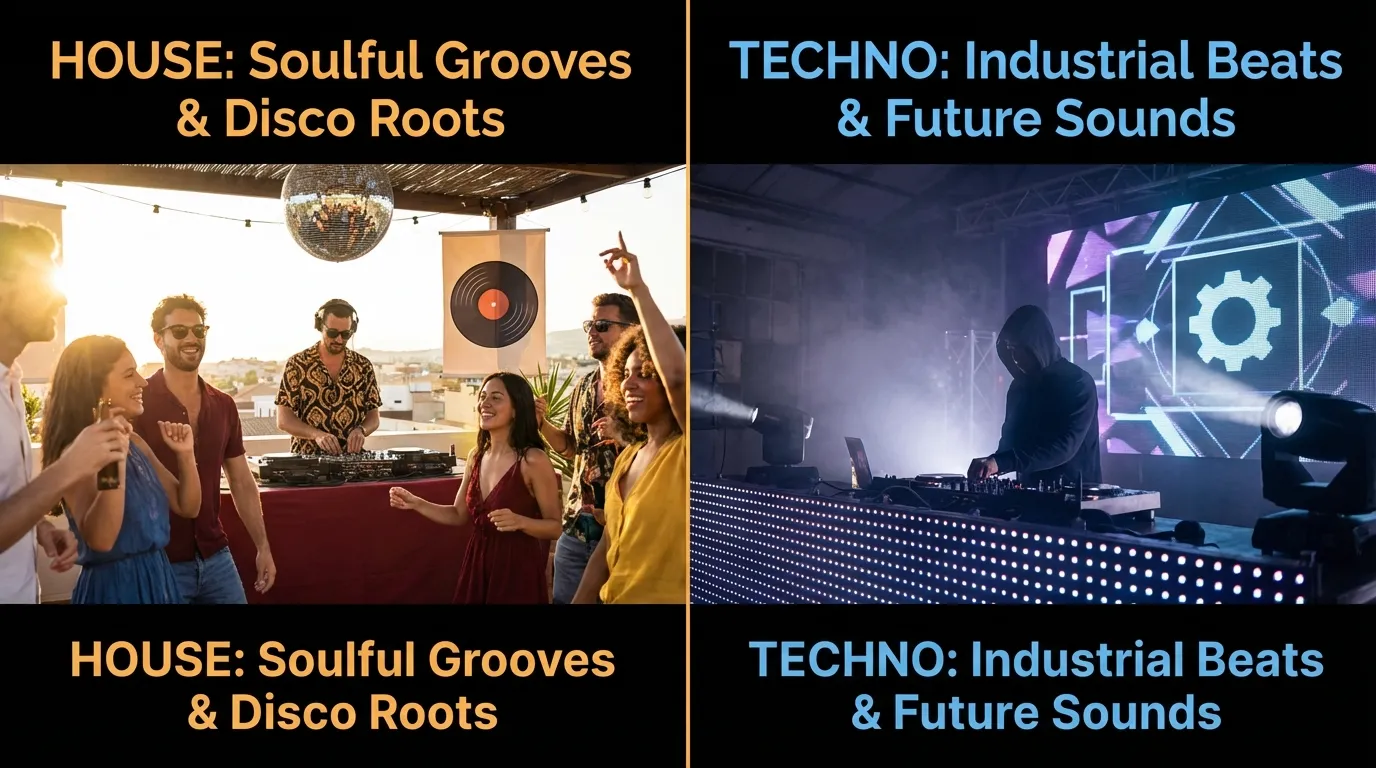
House music usually has a warmer, groove-based sound that encourages dancing with soulful melodies and vocals.
Techno, on the other hand, focuses more on repetitive beats, deep basslines, and a darker, mechanical atmosphere.
In discussions about house vs techno, people often say that house music feels more soulful and energetic, while techno feels hypnotic and futuristic.
Why Is Their Difference Necessary to Know for Learners and Experts?
Understanding the difference between house and techno is important for both music learners and professionals.
For beginners, knowing the difference between house and techno helps them explore electronic music more clearly. Many newcomers search for house vs techno comparisons to identify the style they enjoy most.
For DJs, producers, and music critics, the difference between house and techno is essential because each genre requires different mixing techniques, production styles, and audience expectations. In clubs and festivals, understanding house vs techno helps DJs create the right mood for the crowd.
Overall, learning the difference between house and techno improves musical awareness and appreciation of electronic culture.
Pronunciation of the Both (US & UK)
House
- US: /haʊs/
- UK: /haʊs/
Techno
- US: /ˈtɛknoʊ/
- UK: /ˈtɛknəʊ/
Before exploring the deeper difference between house and techno, understanding how these terms are pronounced helps when discussing house vs techno in music communities or DJ culture.
Difference Between the Keywords
1. Origin
House music originated in Chicago clubs in the early 1980s.
Example 1: DJs in Chicago used drum machines to create danceable grooves.
Example 2: House music became popular in underground clubs.
Techno originated in Detroit during the 1980s.
Example 1: Detroit producers created futuristic electronic sounds.
Example 2: Techno reflected industrial and technological influences.
This explains an early difference between house and techno.
2. Musical Style
House music often includes soulful melodies and vocals.
Example 1: Many house tracks feature singers or vocal samples.
Example 2: The music feels warm and uplifting.
Techno focuses more on instrumental sounds.
Example 1: Techno tracks rarely use vocals.
Example 2: The music emphasizes rhythm and atmosphere.
This is a key point in house vs techno discussions.
3. Rhythm and Groove
House music has a groovy, swinging rhythm.
Example 1: The beat encourages relaxed dancing.
Example 2: DJs often add funky basslines.
Techno uses a more rigid and repetitive rhythm.
Example 1: Beats feel mechanical and hypnotic.
Example 2: The rhythm creates a deep trance-like mood.
4. Tempo
House music generally has a moderate tempo.
Example 1: Many tracks range between 118–125 BPM.
Example 2: The pace feels smooth and dance-friendly.
Techno often has a faster tempo.
Example 1: Tracks may reach 130 BPM or more.
Example 2: The energy feels intense and driving.
This tempo variation shows another difference between house and techno.
5. Emotional Feel
House music often feels joyful and uplifting.
Example 1: Tracks create a party atmosphere.
Example 2: The mood encourages social dancing.
Techno usually feels darker and more mysterious.
Example 1: Music creates a futuristic vibe.
Example 2: Listeners feel immersed in the rhythm.
6. Production Style
House production emphasizes melody and groove.
Example 1: Producers add piano chords.
Example 2: Basslines are often funky.
Techno production focuses on sound textures.
Example 1: Producers experiment with synthetic sounds.
Example 2: Tracks highlight percussion and effects.
This difference often appears in house vs techno debates among producers.
7. Club Atmosphere
House music is common in lively dance clubs.
Example 1: Clubs play house during social dance events.
Example 2: The crowd dances in groups.
Techno is popular in underground clubs.
Example 1: Techno events focus on deep, immersive dancing.
Example 2: The environment feels intense and energetic.
8. Cultural Influence
House music was influenced by disco and soul music.
Example 1: Early house DJs sampled disco tracks.
Example 2: The genre celebrated dance culture.
Techno was influenced by electronic experimentation.
Example 1: Producers used synthesizers heavily.
Example 2: The music reflected futuristic ideas.
9. DJ Mixing Style
House DJs often mix tracks smoothly.
Example 1: They blend melodies between songs.
Example 2: The transitions feel gradual.
Techno DJs focus on long rhythmic transitions.
Example 1: Beats are layered continuously.
Example 2: The rhythm builds slowly.
10. Listener Experience
House music creates a social dance experience.
Example 1: People sing along to vocal tracks.
Example 2: The music encourages group energy.
Techno creates an immersive listening experience.
Example 1: Listeners focus on rhythm and atmosphere.
Example 2: The crowd moves to the hypnotic beat.
This final comparison summarizes the difference between house and techno.
Nature and Behaviour of Both
House music behaves like a celebration of rhythm and melody. Its grooves, vocals, and uplifting sound make it ideal for social dance environments.
Techno behaves like an exploration of sound and rhythm. Its repetitive beats and futuristic tones create a deep, hypnotic atmosphere. Understanding this nature reveals the deeper difference between house and techno often discussed in house vs techno comparisons.
Why People Are Confused About Their Use?
| Feature | House | Techno | Similarity |
| Genre Type | Dance music | Electronic dance music | Both belong to EDM |
| Beat Structure | Groovy rhythm | Repetitive rhythm | Both use 4/4 beats |
| Instruments | Drum machines, vocals | Synthesizers, electronic sounds | Both use digital production |
| Environment | Dance clubs | Underground clubs | Both popular in nightlife |
People often confuse house vs techno because both genres share similar electronic beats and are commonly played in clubs.
Which Is Better in What Situation?
House music is better for lively social events, parties, and club nights where people want to dance together. Its melodic sound and vocals create a friendly and energetic atmosphere. DJs often play house music during early club hours to build a welcoming vibe for the crowd.
Techno is better for intense dance environments where the focus is on rhythm and immersion. In underground clubs or late-night festivals, techno creates a powerful experience that keeps the dance floor moving. This is why debates about house vs techno often depend on the mood and environment.
How the Keywords Are Used in Metaphors and Similes
These music genres sometimes appear in creative comparisons.
Examples:
- “Her energy on the dance floor was like house music, joyful and uplifting.”
- “The city’s nightlife felt like techno, dark, intense, and hypnotic.”
These metaphors reflect the emotional difference between house and techno.
Connotative Meaning of Both Keywords
House – Positive
Example:
“House music brings warmth and energy to dance floors.”
Techno – Neutral to Positive
Example:
“Techno represents futuristic sound and underground culture.”
Idioms or Proverbs Related to the Words
Since these are music genres, there are no traditional idioms directly linked to them.
However, similar expressions about music exist.
Example proverb:
“Music is the universal language.”
Example sentence:
Whether it is house or techno, music is the universal language that connects people.
Works in Literature Using the Keywords
- Energy Flash: A Journey Through Rave Music and Dance Culture — Music history, Simon Reynolds, 1998
- Last Night a DJ Saved My Life — Music culture, Bill Brewster & Frank Broughton, 1999
- Techno Rebels — Music history, Dan Sicko, 1999
Movie Names Related to the Keywords
- Berlin Calling — 2008, Germany
- We Call It Techno — 2008, Germany
- Eden — 2014, France
These films explore electronic music culture and themes similar to house vs techno.
Frequently Asked Questions
1. What is the main difference between house and techno?
The difference between house and techno is that house focuses on groove and melody, while techno emphasizes repetitive electronic beats.
2. Which genre is older?
House music appeared slightly earlier in the early 1980s.
3. Is techno faster than house?
Yes, techno generally has a faster tempo.
4. Why do people compare house vs techno?
People compare them because both belong to electronic dance music but have distinct styles.
5. Can DJs mix house and techno together?
Yes, many DJs blend both genres to create unique dance experiences.
How Both Are Useful for Surroundings
House and techno play important roles in modern music culture. They bring people together in clubs, festivals, and social gatherings.
These genres also inspire creativity in music production, DJ culture, and nightlife industries. Understanding the difference between house and techno helps listeners appreciate the diversity of electronic music.
Final Words for the Both
House and techno are two powerful pillars of electronic dance music. While house brings warmth and melody to the dance floor, techno offers deep rhythm and futuristic energy.
Knowing the difference between house and techno helps music lovers explore the fascinating world of house vs techno culture.
Conclusion
The difference between house and techno mainly lies in rhythm, style, and emotional atmosphere. House music focuses on groove, vocals, and uplifting energy, while techno emphasizes repetitive beats and futuristic sounds.
By understanding the difference between house and techno, listeners can better appreciate the diversity of electronic music. Whether someone prefers the soulful energy of house or the hypnotic intensity of techno, both genres continue to shape global nightlife and dance culture. Exploring house vs techno ultimately helps music fans discover new sounds and experiences.