The difference between ventilation and respiration is an important concept in biology and medicine, yet many people confuse these two terms in daily discussions about breathing. Imagine a patient in a hospital connected to a ventilator. The machine helps the lungs move air in and out, but doctors still monitor whether the body cells are actually using that oxygen.
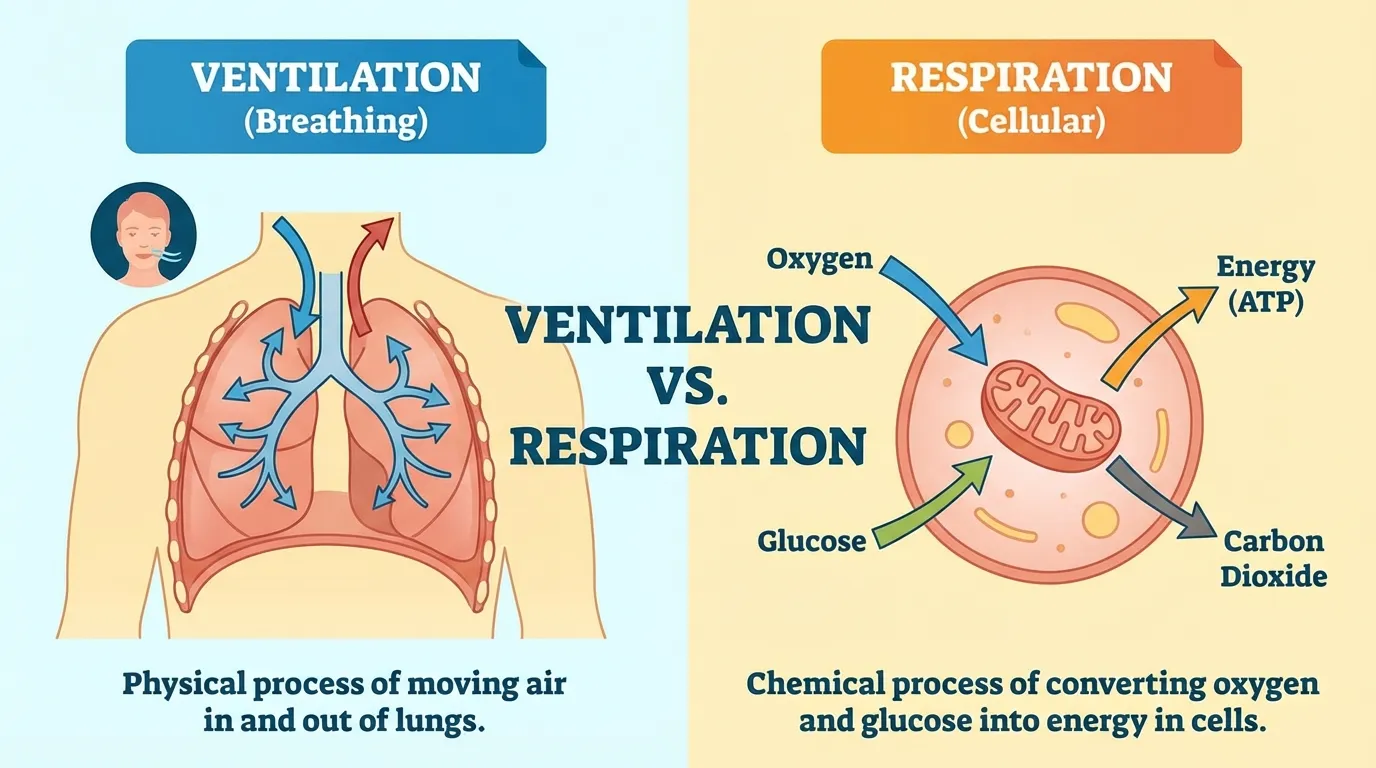
This real-life situation clearly explains the difference between ventilation and respiration. Ventilation refers to the physical movement of air into and out of the lungs, while respiration involves the chemical process where cells use oxygen to release energy from food.
Understanding the difference between ventilation vs respiration helps students, healthcare workers, and researchers interpret how the body functions. While both processes are connected to breathing, they occur in different stages of oxygen usage.
Many learners struggle with the difference between ventilation and respiration because the terms are often used interchangeably. However, knowing the difference between ventilation vs respiration helps explain how oxygen travels from the air into cells where energy is produced.
In this article, we will explore the difference between ventilation and respiration in detail so that both beginners and experts can clearly understand these essential biological processes.
Key Difference Between the Both
The main difference between ventilation and respiration lies in their functions in the breathing process.
Ventilation is the mechanical movement of air between the atmosphere and the lungs. It involves inhalation and exhalation controlled by the diaphragm and chest muscles.
Respiration, on the other hand, is a biochemical process that occurs in cells. It uses oxygen to break down glucose and release energy in the form of ATP.
Therefore, the difference between ventilation vs respiration can be summarized as:
- Ventilation = physical movement of air
- Respiration = chemical process producing energy
Recognizing this difference between ventilation and respiration is essential for understanding how the human body obtains and uses oxygen.
Why Is Their Difference Necessary to Know for Learners and Experts?
Understanding the difference between ventilation and respiration is essential for students studying biology, medicine, and physiology. It helps them correctly interpret how breathing works at both the organ and cellular levels.
For healthcare professionals, recognizing the difference between ventilation vs respiration is even more critical. A patient may have proper ventilation but still suffer from poor respiration due to cellular problems.
The difference between ventilation and respiration also helps researchers develop treatments for respiratory diseases such as asthma, pneumonia, and lung failure.
In society, knowledge of the difference between ventilation vs respiration improves public awareness about breathing disorders and medical technologies like ventilators.
Pronunciation of the Both (US & UK)
Correct pronunciation helps learners discuss scientific terms confidently.
Ventilation
US pronunciation: /ˌvɛn.t̬əˈleɪ.ʃən/
UK pronunciation: /ˌven.tɪˈleɪ.ʃən/
Respiration
US pronunciation: /ˌres.pəˈreɪ.ʃən/
UK pronunciation: /ˌres.pɪˈreɪ.ʃən/
Now that we know how to pronounce these terms, let’s explore the difference between ventilation and respiration through specific characteristics.
Difference Between the Keywords
10 Points of Difference
1. Definition
Ventilation is the movement of air into and out of the lungs.
Respiration is the process of releasing energy from food using oxygen.
Example of ventilation: breathing in fresh air during exercise.
Example of ventilation: exhaling carbon dioxide after breathing.
Example of respiration: cells using oxygen to produce energy.
Example of respiration: glucose breaking down in mitochondria.
2. Type of Process
Ventilation is a physical process.
Respiration is a chemical process.
Example ventilation: diaphragm contraction during inhalation.
Example ventilation: expansion of the chest cavity.
Example respiration: cellular respiration producing ATP.
Example respiration: oxygen reacting with glucose.
3. Location
Ventilation occurs in the lungs and airways.
Respiration occurs inside body cells.
Example ventilation: air moving through bronchi and bronchioles.
Example ventilation: oxygen reaching alveoli.
Example respiration: reactions inside mitochondria.
Example respiration: metabolic activity in muscle cells.
4. Function
Ventilation supplies oxygen to the lungs.
Respiration uses oxygen to produce energy.
Example ventilation: breathing faster during running.
Example ventilation: controlled breathing in yoga.
Example respiration: muscles producing energy during exercise.
Example respiration: brain cells using oxygen for activity.
5. Energy Production
Ventilation does not produce energy.
Respiration produces energy in the form of ATP.
Example ventilation: breathing normally during sleep.
Example ventilation: deep breathing during meditation.
Example respiration: cells producing ATP during metabolism.
Example respiration: energy release during glucose breakdown.
6. Mechanism
Ventilation involves muscle movement.
Respiration involves enzyme-controlled chemical reactions.
Example ventilation: diaphragm contraction.
Example ventilation: rib cage expansion.
Example respiration: Krebs cycle reactions.
Example respiration: electron transport chain.
7. Control System
Ventilation is controlled by the respiratory system and nervous signals.
Respiration is controlled by cellular metabolism.
Example ventilation: breathing rate increases during exercise.
Example ventilation: breathing slows during rest.
Example respiration: metabolism increases during activity.
Example respiration: cells produce energy when needed.
8. Importance
Ventilation allows oxygen entry and carbon dioxide removal.
Respiration provides energy for survival.
Example ventilation: oxygen entering lungs during inhalation.
Example ventilation: carbon dioxide leaving body during exhalation.
Example respiration: energy for muscle movement.
Example respiration: energy for brain function.
9. Dependency
Respiration depends on ventilation to supply oxygen.
Ventilation does not directly depend on respiration.
Example ventilation: breathing even during sleep.
Example ventilation: automatic breathing reflex.
Example respiration: cells needing oxygen from lungs.
Example respiration: energy production during digestion.
10. Outcome
Ventilation results in gas exchange in lungs.
Respiration results in energy release.
Example ventilation: oxygen entering bloodstream.
Example ventilation: carbon dioxide leaving lungs.
Example respiration: ATP production in cells.
Example respiration: heat release during metabolism.
Nature and Behaviour of Both
Ventilation is a mechanical and rhythmic process. It happens continuously throughout life and involves coordinated movement of respiratory muscles.
Respiration is a metabolic process occurring in every living cell. It is complex and involves multiple chemical reactions that release energy necessary for life.
Why People Are Confused About Their Use?
| Feature | Ventilation | Respiration | Similarity |
| Meaning | Movement of air | Energy production | Both related to breathing |
| Type | Physical | Chemical | Both support life |
| Location | Lungs | Cells | Both involve oxygen |
| Function | Gas exchange | Energy release | Both part of respiratory system |
| Importance | Oxygen supply | Energy production | Both essential for survival |
Which Is Better in What Situation?
Ventilation is essential when the body needs oxygen supply. For example, in medical emergencies doctors use ventilators to support breathing. In such situations ventilation is critical because it ensures oxygen reaches the lungs and carbon dioxide is removed from the body.
Respiration becomes important when the body needs energy for activities like walking, thinking, or exercising. Even if ventilation supplies oxygen, respiration must occur inside cells to produce energy that powers body functions.
How the Keywords Are Used in Metaphors and Similes
Ventilation can be compared to opening windows in a house to allow fresh air to circulate.
Respiration is like a power plant where fuel is burned to generate energy for an entire city.
Connotative Meaning of Both
Ventilation usually carries a neutral or positive meaning.
Example: Good ventilation improves indoor air quality.
Respiration has a positive scientific meaning related to life processes.
Example: Healthy respiration ensures proper energy production in cells.
Idioms or Proverbs Related to the Words
“Take a breather” – meaning to rest.
Example: After running the marathon, he needed to take a breather.
“Breath of fresh air” – something refreshing or new.
Example: The new teacher was a breath of fresh air for the students.
Works in Literature
- Respiration Physiology — Science/Medical, John B. West, 2012
- Human Physiology: The Mechanisms of Body Function — Biology, Arthur Vander, 2010
Movie Names Made on Keywords
- Respire (Breathe) — 2014, France
- Breathe — 2017, United Kingdom
Frequently Asked Questions
1. What is the main difference between ventilation and respiration?
Ventilation is the movement of air in and out of lungs, while respiration is the cellular process of producing energy.
2. Does ventilation produce energy?
No. Energy is produced during respiration.
3. Where does respiration occur?
Respiration occurs in cells, mainly in mitochondria.
4. Are ventilation and respiration connected?
Yes. Ventilation supplies oxygen needed for respiration.
5. Can respiration occur without ventilation?
No. Cells need oxygen supplied through ventilation.
How Both Are Useful for Surroundings
Ventilation helps maintain healthy indoor environments by circulating fresh air and removing pollutants.
Respiration supports all living organisms by producing the energy needed for growth, movement, and survival.
Together, these processes maintain balance in ecosystems and sustain life on Earth.
Final Words for the Both
Ventilation and respiration are closely linked but fundamentally different processes. Ventilation brings oxygen into the lungs, while respiration uses that oxygen to release energy in cells.
Understanding the difference between ventilation and respiration helps us appreciate how the body breathes, functions, and survives.
Conclusion
The difference between ventilation and respiration is a key concept in biology and physiology. Ventilation refers to the mechanical process of breathing, involving the movement of air into and out of the lungs. Respiration, however, is the chemical process through which cells convert oxygen and glucose into energy.
Although they occur at different levels, both processes work together to sustain life. Ventilation supplies oxygen to the body, and respiration uses that oxygen to generate energy required for every bodily function. Understanding the difference between ventilation vs respiration helps learners, healthcare professionals, and researchers interpret how the respiratory system supports life and maintains health.