Quick Answer: A cappuccino and a latte start from the same espresso base, but the milk is handled completely differently. A cappuccino uses equal parts espresso, steamed milk, and thick foam (a 1:1:1 ratio) in a small 5-6 oz cup, giving it a bold, airy, espresso-forward taste. A latte uses one part espresso to much more steamed milk with only a thin layer of foam, served in a larger 8-12 oz cup, making it creamier, milkier, and milder. Caffeine is the same if both use the same number of shots; the difference is texture, milk volume, and flavor intensity.
| Feature | Cappuccino | Latte |
|---|---|---|
| Ratio | 1:1:1 espresso, steamed milk, foam | Roughly 1:3 espresso to steamed milk, thin foam cap |
| Serving size | Small: 5-6 oz (150-180 ml) | Large: 8-12 oz (240-360 ml) |
| Milk texture | Thick, dry, airy foam | Smooth, silky steamed milk with microfoam |
| Taste | Bold, espresso-forward, balanced | Mild, creamy, milk-forward |
| Caffeine | 63-126 mg (1-2 shots) | 63-126 mg (1-2 shots); same if shots match |
| Calories (whole milk) | About 80-120 | About 130-210 |
| Foam | Thick cap, about a third of the drink | Thin layer, about 1 cm |
| Best for | Quick, intense coffee moments; tasting the espresso | Slow sipping; flavored drinks; latte art |
| Origin | Italy, named for Capuchin monks’ robes | From Italian caffè latte; popularized in American cafés |
| Customization | Cocoa or cinnamon dusting on the foam | Syrups like vanilla, caramel, hazelnut |
What Is a Cappuccino?
A cappuccino is a classic Italian espresso drink built from equal thirds: one part espresso, one part steamed milk, and one part thick milk foam. The Specialty Coffee Association defines the traditional cappuccino as a 150-180 ml (5-6 oz) drink with a single or double espresso shot crowned by a deep cap of airy foam. The name comes from the Capuchin monks, whose brown robes matched the drink’s color.
The defining feature is the foam. The barista steams the milk longer, whipping in air to create a thick, almost spoonable layer that sits proudly on top. That foam does more than look good: it insulates the drink, carries aroma to your nose with every sip, and gives the cappuccino its signature light-yet-rich mouthfeel.
Because the milk volume is small, the espresso stays in charge. A cappuccino tastes like coffee first, softened and sweetened by milk rather than buried in it. Italians traditionally drink it only in the morning, considering milky coffee after meals a breach of etiquette, a custom that still surprises tourists ordering a cappuccino after dinner in Rome.
What Is a Latte?
A latte, short for caffè latte (literally “milk coffee” in Italian), flips the proportions. It starts with the same espresso shot but adds a generous pour of steamed milk, roughly three to four times the espresso volume, finished with just a thin layer of foam on top. It is served in a larger cup or glass, typically 8-12 oz.
The milk here is steamed, not heavily frothed, producing a silky microfoam with tiny, glossy bubbles rather than the cappuccino’s airy cap. The result is a smooth, velvety drink where the espresso reads as a warm background note instead of the lead actor.
The latte is the canvas of modern café culture: its wide, milky surface is what makes latte art possible, and its mild base welcomes flavored syrups like vanilla, caramel, and hazelnut. It became the default American café drink precisely because it is approachable: all the ritual of espresso with training wheels of milk.
Ingredients and Ratios
Both drinks contain exactly the same three ingredients: espresso, steamed milk, and milk foam. The entire difference is proportion and texture. A cappuccino divides them into equal thirds. A latte is roughly one part espresso to three or four parts steamed milk with a foam garnish. Nespresso’s cappuccino vs latte guide lays out these ratios with step-by-step preparation for each drink.
Think of it as a spectrum of milkiness. At one end sits the straight espresso shot: intense, concentrated, no milk at all. Add equal thirds of milk and foam and you get a cappuccino. Keep pouring steamed milk until the espresso is a gentle flavoring and you have arrived at a latte. Neither is diluted espresso in a bad sense; the milk’s proteins and sugars genuinely transform the flavor, rounding bitterness into sweetness.
Italian food and drink names carry these precise meanings, much like Italian pasta shapes do: just as cavatappi vs cellentani describes two distinct spiral pastas, cappuccino and latte are distinct drinks hiding behind similar menus, and knowing the definitions keeps you from ordering the wrong one.
Milk Texture: Foam vs Microfoam
Texture is where the drinks truly diverge. Cappuccino foam is dry and airy, made by stretching the milk with lots of air during steaming. It sits in a distinct layer you can see and even spoon, and each sip alternates between foam cloud and liquid coffee beneath. A well-made cappuccino should hold its foam cap to the last sip.
Latte milk is wet and silky. The barista steams it with minimal air, creating microfoam: milk with microscopic bubbles that looks like wet paint and pours smoothly. Instead of a separate layer, the milk and espresso blend into one creamy continuum, which is why latte art designs can be poured directly into the surface.
This texture difference also changes temperature behavior. The cappuccino’s foam cap insulates the drink, keeping it hot longer, while the latte’s larger volume of liquid milk cools a bit faster but stays warm through sheer mass. Neither is objectively better; it is a choice between airy lightness and silky weight.
Serving Size and Caffeine
Size is the quickest way to tell them apart on a menu. A traditional cappuccino comes in a small 5-6 oz cup; anything much larger with that name is a café improvising. A latte arrives in a bigger 8-12 oz cup or tall glass to hold all that milk. If someone hands you a 16 oz “cappuccino,” you are really holding a milky latte wearing a foam hat.
Caffeine follows the shots, not the name. A single espresso shot contains roughly 63 mg of caffeine, a double about 126 mg. A cappuccino and a latte made with the same number of shots contain identical caffeine; the latte just spreads it through more milk. Many cafés default to a double shot in larger lattes, which is why lattes sometimes feel stronger, but that is a recipe choice, not a property of the drink.
Per ounce, though, the cappuccino is the stronger-tasting drink by far. Less milk means less dilution, so the espresso’s bitterness, acidity, and aroma hit harder. Coffee lovers who want to actually taste the espresso’s origin character usually prefer the cappuccino’s concentrated format.
Calories and Nutrition
Almost all the calories in either drink come from milk. A 6 oz cappuccino made with whole milk lands around 80-120 calories, since only about 4 oz of that is milk and much of the volume is calorie-free foam. A 12 oz whole-milk latte runs roughly 150-210 calories because it contains two to three times the milk.
Milk choice swings the numbers significantly. Switching to skim milk can cut a latte to under 100 calories, while oat milk, the barista favorite for its creamy texture, adds calories similar to whole milk. Flavored syrups are the real calorie bombs: each pump adds around 20 calories and 5 grams of sugar, and lattes routinely get three or four pumps.
For the dairy-free crowd, both drinks adapt well, though foam behaves differently across milks. Oat milk froths beautifully for lattes, while almond milk can be trickier for a tall cappuccino cap. Dietary choices around milk often connect to broader eating patterns, which is where the vegan vs vegetarian distinction helps clarify what each non-dairy option actually means.
Taste Profile and Variations
Taste a cappuccino and a latte blind and the difference is unmistakable. The cappuccino leads with espresso: roasty, slightly bitter, aromatic, with the milk playing a supporting role that adds sweetness and body. The foam contributes a light, almost dessert-like first impression before the coffee asserts itself.
The latte leads with milk: sweet, creamy, comforting, with the espresso as a warm undertone. It is the gentler drink and the better gateway for people who find straight espresso too intense. Add vanilla syrup and it becomes a dessert; the same syrup in a cappuccino would fight the coffee rather than complement it.
Both drinks have popular riffs. A dry cappuccino uses even more foam and less steamed milk for maximum airiness, while a wet cappuccino leans milkier, approaching latte territory. Lattes spawn endless variants: iced lattes, flavored lattes, and the flat white, a smaller, stronger cousin. Ordering gets easier once you know the base definitions, whether you are decoding a coffee menu or a sandwich board, where sub vs hoagie causes the same kind of delicious confusion.
Which One Should You Choose?
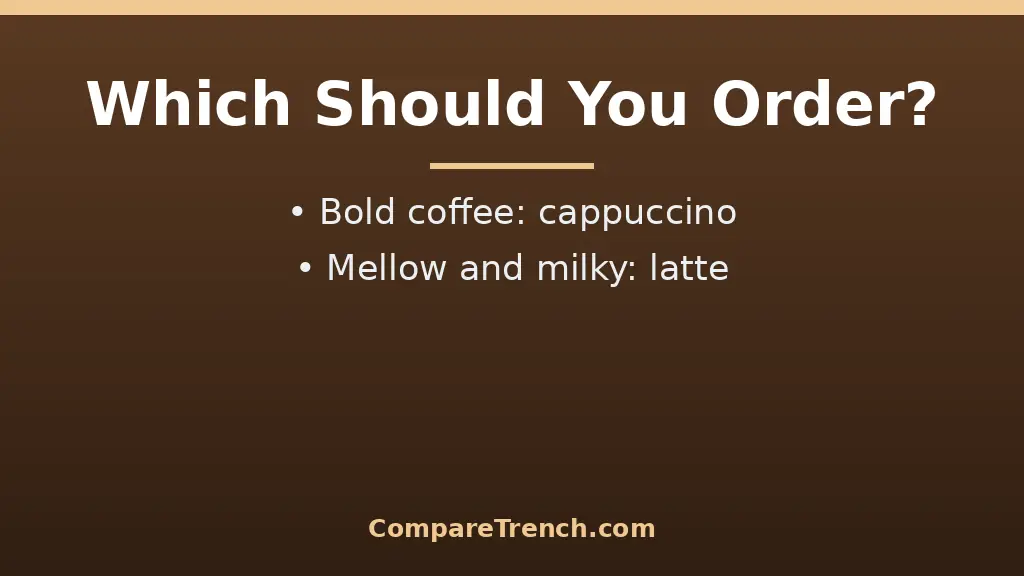
Choose a cappuccino if you love the taste of espresso and want it front and center, if you enjoy textural contrast and a dramatic foam cap, or if you want a smaller, lower-calorie drink that still feels indulgent. It is the connoisseur’s choice for tasting single-origin espresso, and its compact size makes it the classic morning pick-me-up.
Choose a latte if you prefer a mellow, milky drink you can sip slowly, if you like flavored syrups or latte art, or if you are newer to espresso and want the gentlest introduction. Its larger size also makes it the better companion for long café sessions, laptop work, or lingering conversations.
There is no wrong answer, and mood matters: many coffee drinkers order cappuccinos on brisk mornings and lattes for lazy afternoons. Coffee is also a social drink, and the café you choose shapes the experience as much as the cup; regulars will tell you the difference between friendship vs relationship sometimes starts over exactly these kinds of low-stakes coffee dates. Even the background music plays a role in café atmosphere, and if the playlist has you curious, the house vs techno distinction explains what you are hearing. When in doubt, order the smaller drink first: you can always size up next time.
Frequently Asked Questions
Which has more caffeine, cappuccino or latte?
Neither, inherently. Caffeine depends on the number of espresso shots, and both drinks typically use one or two. A double-shot cappuccino and a double-shot latte contain the same caffeine; the latte just dilutes it in more milk, so it tastes milder.
Is a cappuccino stronger than a latte?
In flavor, yes. The cappuccino’s equal-thirds ratio means less milk diluting the espresso, so the coffee taste is bolder and more concentrated per sip. Strength of flavor and caffeine content are different things: the cappuccino tastes stronger even when caffeine is identical.
What is a dry vs wet cappuccino?
A dry cappuccino has more foam and less steamed milk, making it airier and more intensely coffee-flavored. A wet cappuccino has more steamed milk and less foam, making it creamier and milder, closer to a small latte. Most cafés default to somewhere in the middle unless you specify.
Can you make a cappuccino or latte without an espresso machine?
Yes, approximately. Strong brewed coffee or a moka pot can stand in for espresso, and milk can be frothed with a French press, a handheld frother, or even a whisked jar. The results will not match café espresso’s crema and pressure-extracted intensity, but the ratios and textures translate well.
Why is my café latte so big compared to the cappuccino?
Because the recipes demand it. A latte needs room for three to four times more steamed milk than espresso, so it is served in 8-12 oz cups or larger. A traditional cappuccino’s equal-thirds ratio fits perfectly in a 5-6 oz cup; serving it bigger would break the proportions that define the drink.

Conclusion
The difference between cappuccino and latte is all in the milk: equal parts espresso, steamed milk, and foam in a small cup makes a bold, airy cappuccino, while espresso drowned in steamed milk with a whisper of foam makes a creamy, mellow latte. Same ingredients, same caffeine per shot, completely different drinking experiences.
Order the cappuccino when you want to taste the coffee, and the latte when you want to savor the milk. Either way, you now know exactly what should arrive when the barista calls your name.