Quick Answer: A motel (“motor hotel”) is a small, budget-friendly roadside lodging where room doors typically open directly onto the parking lot — built for drivers needing a convenient overnight stop. A hotel is a larger establishment with interior corridors, a staffed lobby, and amenities like restaurants, gyms, and room service — built for comfort over longer or more varied stays. All motels are technically hotels, but not all hotels are motels.
Booking a place to stay should be simple, but the choice between a hotel and a motel confuses many travelers. The words differ by one letter, yet they describe genuinely different kinds of lodging. Knowing the difference between a hotel and a motel — in layout, services, price, and location — helps you pick the right stay for a road trip, a business trip, or a family vacation.
Hotel vs Motel: Side-by-Side Comparison
| Feature | Hotel | Motel |
|---|---|---|
| Word origin | From French hôtel, a large establishment for travelers | Blend of “motor” + “hotel,” coined in the 1920s |
| Building layout | Multi-story, rooms accessed via interior hallways and elevators | One or two stories, room doors open directly to the parking lot |
| Typical location | City centers, airports, resorts, business districts | Highways, main roads, outskirts of towns |
| Amenities | Restaurants, bars, gyms, pools, spas, concierge, room service, meeting rooms | Basic: free parking, Wi-Fi, vending machines, sometimes a small pool |
| Service level | Staffed front desk, housekeeping, concierge, bell staff | Minimal staff interaction, self-service style |
| Price range | Wide: budget to luxury, generally higher | Budget-friendly, among the cheapest lodging options |
| Best for | Business trips, vacations, events, longer stays | Road trips, overnight stops, budget travelers |
| Typical stay length | One night to several weeks | Usually one night |
What Is a Hotel?
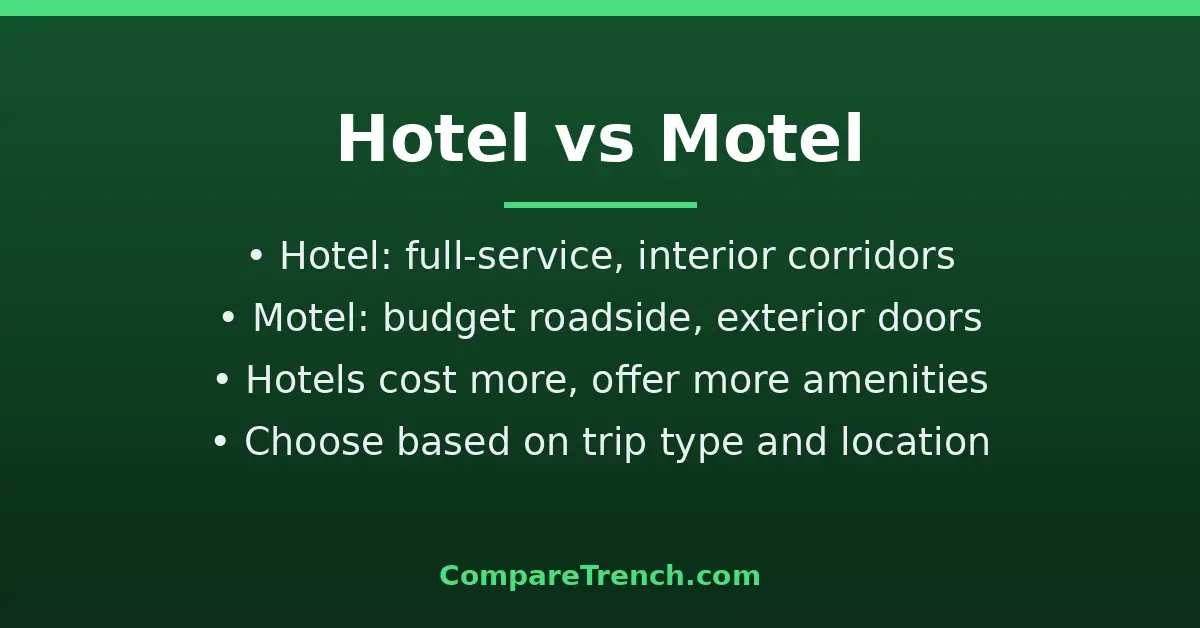
A hotel is a commercial lodging establishment offering private rooms to travelers, usually with a range of services beyond just a bed. Hotels are typically multi-story buildings where guests enter through a lobby and reach their rooms via interior corridors and elevators. A staffed front desk handles check-in, and larger hotels add restaurants, bars, fitness centers, swimming pools, spas, business centers, and meeting or event spaces.
Hotels span the full price spectrum: budget chains, mid-range business hotels, boutique properties, and luxury resorts. Many belong to recognized brands with loyalty programs, standardized quality, and consistent amenities. The hotel experience is built around comfort and service — someone else carries your bags, cleans your room daily, and brings food to your door.
What Is a Motel?
A motel — short for “motor hotel” — is a type of hotel designed specifically for motorists. The concept took off in 1920s America as car ownership spread: drivers on long journeys needed cheap, convenient places to sleep without detouring into city centers. The defining feature is practical: rooms are arranged in one or two low-rise rows, and each room door opens directly onto the parking area, so you can park steps from your bed and unload luggage in seconds.
Motels keep everything simple to keep prices low: a small office for check-in, basic rooms with a bed, bathroom, TV, and Wi-Fi, free parking right outside, and little else. Many modern motel chains have renovated their properties significantly, so the old stereotype of run-down roadside rooms no longer matches the better-rated options. Some have a vending area or a small pool, but you will not find restaurants, gyms, or concierges. Dictionary.com’s motel vs hotel comparison notes the same core distinction: motels are the roadside, exterior-access subset of hotels.
Layout and Design: The Most Visible Difference
You can usually tell a motel from a hotel at a glance. Hotels present a vertical, enclosed design: a grand or functional entrance, a lobby, elevators, and long interior hallways with rooms on either side. Security and climate control benefit from this enclosed layout.
Motels are horizontal and open: long, low buildings — often L- or U-shaped around a parking lot — with exterior walkways. Every room has its own outside door, which is supremely convenient when you are hauling suitcases from the car but offers less privacy and security than an interior corridor. This exterior-access design is the single most reliable way to identify a motel.
Amenities and Services Compared
The amenity gap is where the price difference comes from. A typical hotel offers daily housekeeping, on-site dining (from breakfast buffets to fine restaurants), room service, a fitness center, a pool, laundry service, a concierge for bookings and recommendations, and event or meeting space. Business hotels add work desks, fast Wi-Fi, and conference rooms; resorts add spas, kids’ clubs, and activities.
A typical motel offers the essentials: a clean room, private bathroom, TV, Wi-Fi, air conditioning, and free parking directly outside your door. Housekeeping may be available on request rather than daily, and food options are usually limited to vending machines or a continental breakfast — if that. The trade-off is deliberate: fewer services mean lower operating costs and lower room rates.
Price: What You Pay and Why
Motels are consistently among the cheapest lodging options — often 30–60% less than a comparable hotel in the same area. The savings come from the stripped-down model: minimal staffing, no restaurant to run, no gym or spa to maintain, and cheaper roadside land. For a solo road-tripper who just needs sleep and a shower, that is excellent value.
Hotels cost more because you are paying for service and facilities, not just square footage. Prime locations (downtown, beachfront, airport-adjacent) also command premiums. That said, budget hotel chains can approach motel prices while still offering interior corridors and daily housekeeping — so compare actual listings rather than assuming.
Location: Where You Find Each
Motels cluster along highways, interstates, and the outskirts of towns — exactly where tired drivers need them. The classic American road trip, from Route 66 to interstate corridors, runs on motels. You will rarely find a motel in a downtown financial district.
Hotels go where travelers gather: city centers, airports, convention areas, tourist attractions, and resorts. Business travelers need downtown locations; vacationers want beachfront or old-town addresses. Location is often the deciding factor: if your plans center on a city, a motel 20 minutes out on the highway may cost you more in time and transport than you save on the room.
Which Should You Choose for Your Trip?
Choose a motel when: you are on a road trip and need a quick overnight stop; budget matters more than amenities; you want to park right at your door; you are traveling with lots of gear or pets and value easy car access; your plans are flexible and you are booking last-minute.
Choose a hotel when: you are traveling for business or an event; you want amenities like a gym, pool, or restaurant; you are staying multiple nights and value daily housekeeping; you prefer the security and comfort of interior corridors; location in a city center or resort area matters.
Neither is objectively better — they solve different problems. A motel is a tool for the road; a hotel is a base for the destination.
Safety and Quality Tips for Both
Whichever you book, a few checks go a long way: read recent reviews (not just the star rating), confirm the cancellation policy, check that the listed amenities actually exist, and look at photos of the actual room type you are booking. For motels, well-lit parking and solid door locks matter more given the exterior-access layout. For hotels, verify parking costs — downtown hotels often charge $30–50 per night for parking, which can erase the price advantage over alternatives.
Alternatives Worth Knowing: Inns, Hostels, and Vacation Rentals
Hotels and motels are not the only options, and knowing the neighbors helps you choose better. Inns (including bed-and-breakfasts) are small, independently owned properties with a personal touch — often historic buildings, with breakfast included and hosts who know the area. They suit travelers who want charm over scale.
Hostels offer dormitory-style or private rooms at the lowest prices of all, with shared kitchens and social common areas — ideal for young solo travelers and backpackers, less so for anyone wanting privacy. Vacation rentals (whole apartments or houses) beat both hotels and motels for groups and stays longer than a few nights, thanks to kitchens and laundry, though cleaning fees can make single-night stays expensive.
Extended-stay hotels sit between hotels and rentals: hotel-style booking with kitchenettes and weekly rates, built for business travelers on long assignments. When comparing any of these against a hotel or motel, weigh the same four factors — location, amenities you will actually use, total cost including fees and parking, and how many nights you are staying.
Frequently Asked Questions
Is a motel cheaper than a hotel?
Almost always. Motels cut costs with minimal staffing, no restaurants or gyms, and cheaper roadside locations, passing the savings to guests. Expect to pay noticeably less than a hotel in the same region.
Are motels safe?
Most are, but quality varies more than with branded hotels. Stick to well-reviewed properties on busy roads, check that exterior areas are well lit, use the door’s deadbolt and security latch, and keep valuables out of sight in your car.
Why do motel rooms open directly to the parking lot?
That exterior-access design is the whole point of a motel: drivers can park steps from their door and unload luggage without crossing a lobby. It is a legacy of the 1920s motor-travel era that remains the format’s signature convenience.
Do motels have Wi-Fi and breakfast?
Most modern motels offer free Wi-Fi today. Breakfast is hit or miss — some provide a simple continental spread, others just vending machines. If breakfast matters to you, confirm before booking rather than assuming.
Can you stay long-term in a motel?
You can, and some people do — weekly rates are common at independent motels. But for stays beyond a few nights, extended-stay hotels or vacation rentals usually offer better value with kitchens and laundry facilities.

Travel planning involves plenty of small choices like this one — from food stops to daily routines. If you enjoy these practical comparisons, you may also like the difference between espresso and latte and the difference between cappuccino and latte for your morning coffee, the difference between vegan and vegetarian for road-trip dining, and the difference between a sub and a hoagie or the difference between cavatappi and cellentani for quick meals on the go.
Conclusion
The difference between a hotel and a motel is purpose-built design: motels are compact, budget-friendly roadside stops with rooms opening straight onto the parking lot, while hotels are larger, service-rich establishments with interior corridors and full amenities. For an overnight road-trip halt, a motel’s convenience and price are hard to beat; for business, events, or multi-night comfort, a hotel earns its premium. Match the lodging to the trip, compare total costs (room rate plus parking, fees, and transport to your actual destination), and you will never overpay for what you do not need.