Quick Answer: The core difference between anxiety and depression is direction: anxiety is dominated by fear and worry about what could go wrong in the future, while depression is dominated by persistent sadness, emptiness, or loss of interest in the present. Both can disrupt sleep, concentration, and daily life, and they frequently occur together — but they are distinct conditions. Only a qualified clinician can diagnose either; understanding the distinction helps you describe your experience and seek the right help.
Anxiety and depression are two of the most common mental health conditions — and two of the most frequently confused. People use the words interchangeably, yet clinicians treat them as separate families of disorders with their own criteria and treatments. The confusion is understandable: they share several symptoms, often appear together, and the same person can move between them over time.
Learning the difference between anxiety and depression is not about labeling yourself. It is about vocabulary. When you can name what you are feeling — racing dread versus heavy numbness — you can communicate more clearly with healthcare professionals. This guide covers what each condition is, where they overlap, how doctors tell them apart, and what to do if either is interfering with your life.
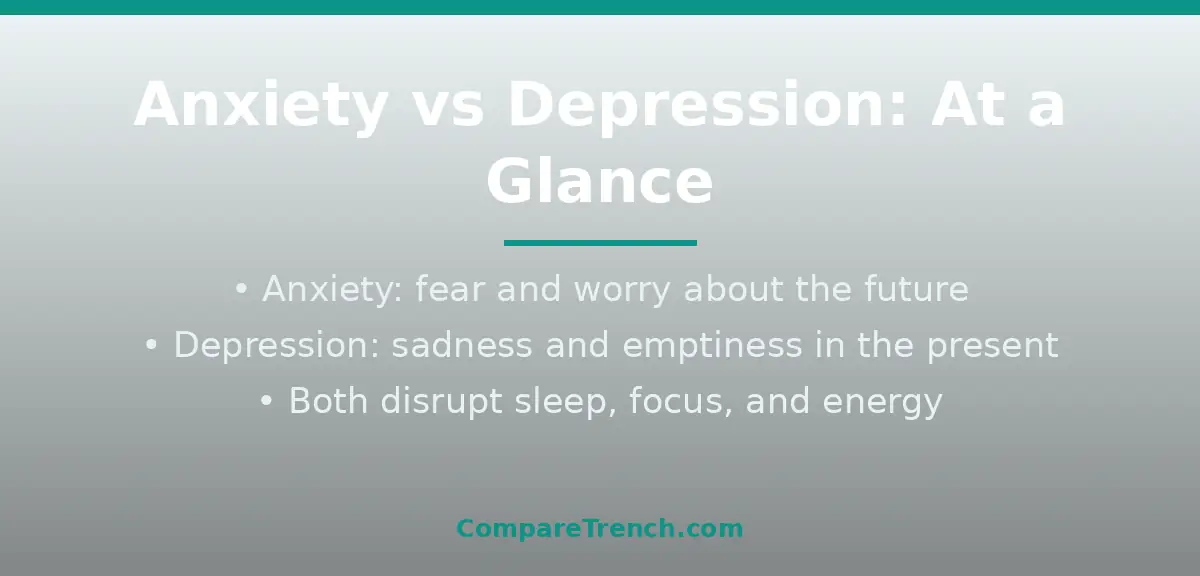
Anxiety vs Depression: At a Glance
The table below summarizes the key differences. These are typical patterns, not hard rules — many people experience a mix of both columns.
| Feature | Anxiety | Depression |
|---|---|---|
| Core experience | Excessive worry, fear, or dread, often about future events | Persistent sadness, emptiness, or loss of interest and pleasure |
| Direction of thoughts | Future-oriented: “What if something goes wrong?” | Past- or present-oriented: “Nothing matters” or “I’ve failed” |
| Energy level | Restless, wired, unable to relax or sit still | Low energy, heavy limbs, hard to get out of bed |
| Emotional tone | Heightened emotions: fear, panic, irritability | Flattened emotions: numbness, hopelessness, guilt |
| Physical symptoms | Racing heart, sweating, trembling, muscle tension, stomach upset | Fatigue, slowed movement and speech, body aches, heaviness |
| Behavior | Avoidance of feared situations; seeking reassurance | Withdrawal from social contact; neglecting routines |
| Sleep | Hard to fall asleep because the mind will not switch off | Too little or too much sleep; waking up still exhausted |
| Concentration | Mind jumps between worries; trouble focusing | Mental fog; slowed thinking and decision-making |
| Appetite | Often reduced by nausea and tension, sometimes increased | Often significantly increased or decreased, with weight change |
What Is Anxiety?
Anxiety is the body’s built-in alarm system. A little anxiety before an exam or interview is normal and even useful — it sharpens focus and motivates preparation. An anxiety disorder is different: the alarm keeps ringing when there is no real danger, or rings so loudly that it interferes with work, relationships, and daily routines.
Clinicians recognize several distinct anxiety disorders. Generalized anxiety disorder (GAD) involves persistent, excessive worry about everyday things — health, money, family, work — that feels impossible to control. Panic disorder brings sudden, intense episodes of fear with symptoms such as chest pain and a pounding heart. Social anxiety disorder centers on an intense fear of being judged, while specific phobias are strong fears of particular objects or situations. What unites them is a threat-focused mind: overestimating danger and avoiding feared situations, which brings short-term relief but keeps the cycle going.
What Is Depression?
Depression, clinically called major depressive disorder when it meets diagnostic criteria, is more than feeling sad for a day or two. It is a persistent state of low mood, emptiness, or irritability lasting at least two weeks, accompanied by changes in thinking, behavior, sleep, appetite, and energy. Its hallmark is anhedonia — the loss of interest or pleasure in things that used to matter.
Depression changes how people think: self-critical thoughts, feelings of worthlessness or excessive guilt, difficulty concentrating, and hopelessness about the future are common. Physically it shows up as fatigue that sleep does not fix, slowed movement and speech, and appetite or weight changes. In its most serious form it can involve thoughts of death or suicide — which is why any mention of self-harm should always be taken seriously. The National Institute of Mental Health describes depression in detail on its page about depression, covering symptoms, causes, and current research.
Symptoms Anxiety and Depression Share
Here is where the difference between anxiety and depression gets blurry — and why self-diagnosis is unreliable:
- Sleep problems: Anxiety makes it hard to fall asleep as the mind races; depression can cause insomnia, early waking, or sleeping far too much.
- Difficulty concentrating: With anxiety, attention jumps between worries; with depression, thinking feels foggy and slow.
- Fatigue: Anxiety burns energy through constant arousal; depression drains it through low drive and slowed systems.
- Irritability and physical complaints: Feeling on edge and feeling worn down both lower frustration tolerance; headaches and digestive problems appear in both.
- Avoidance: Anxiety avoids specific triggers; depression withdraws from activities and social life more broadly.
This overlap is part of why a single treatment plan often helps both conditions at once — the shared symptoms frequently respond to the same therapies.

Key Differences Between Anxiety and Depression
1. The Direction of Your Thoughts
This is the single most cited distinction. Anxiety points forward: “What if I fail the presentation? What if I get sick?” The mind scans the future for threats. Depression points backward or settles in the present: “I always mess things up. What’s the point of trying?”
2. Energy and Arousal
Anxiety is a state of hyperarousal — the nervous system is revved up: wired, jittery, restless, unable to sit still even when exhausted. Depression is usually hypoarousal: low energy, slowed thinking, heaviness in the limbs. The contrast even shows up in the cardiovascular system — much like the functional contrast described in our comparison of arteries and veins.
3. The Emotional Core
Anxiety amplifies emotion: fear, dread, panic, urgency. Depression often flattens it: numbness, emptiness, a sense that nothing really matters. A person with anxiety may cry from overwhelm; a person with depression may be unable to cry at all, even when feeling terrible inside.
4. Relationship to Activities
People with anxiety often want to do things but feel blocked by fear — “I’d love to go, but I’m scared it will go badly.” People with depression often don’t want to do things at all. This helps clinicians identify which condition is driving the avoidance when both are present.
What Causes Anxiety and Depression?
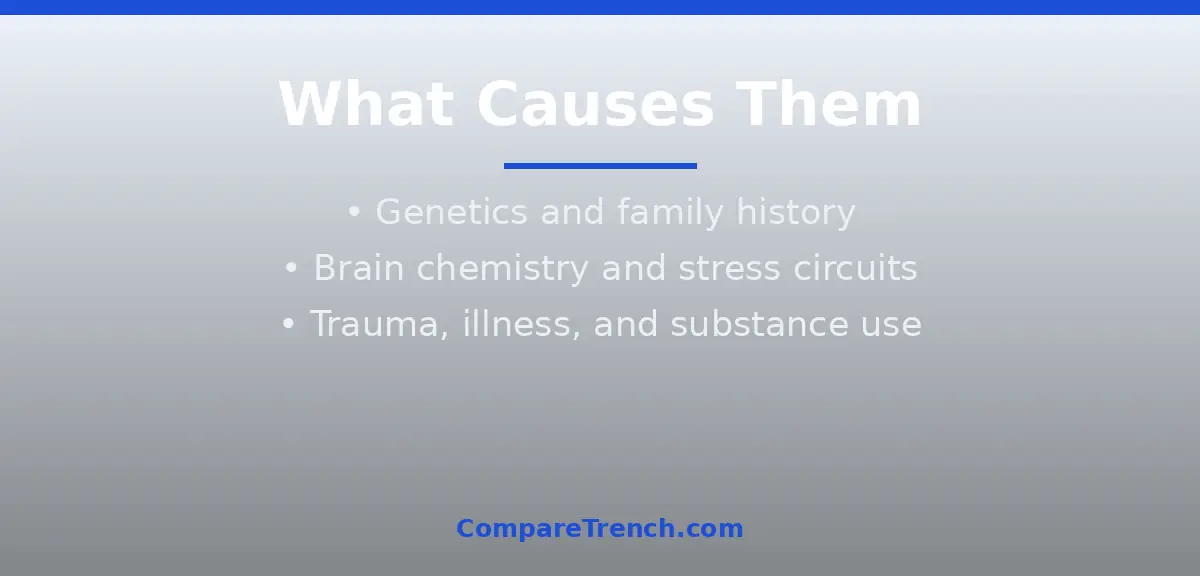
Neither condition has a single cause, and the two share many risk factors — which partly explains why they so often travel together. Genetics plays a role: both run in families. Brain chemistry is implicated in both, with anxiety linked to overactivity in the brain’s fear circuits (including the amygdala) and depression to disruption in reward and motivation circuits. Stress and trauma — chronic stress, childhood adversity, abuse — can trigger either condition or both. Medical conditions such as thyroid problems and hormonal changes can mimic or worsen both, so a medical checkup is a sensible first step. And substance use — alcohol, caffeine, recreational drugs — can amplify either.
Anxiety and depression can also cause each other. Living with constant worry is exhausting, and that exhaustion can harden into hopelessness; the withdrawal of depression can create new anxieties about falling behind. Chronic stress also affects immunity — a reminder that the correct diagnosis shapes the correct treatment, just as knowing the difference between virus and bacteria determines how an infection must be treated.
How Diagnosis Differs
Mental health professionals diagnose anxiety disorders and depression using standardized criteria, most commonly the DSM-5-TR. Generalized anxiety disorder requires excessive worry more days than not for at least six months; major depressive disorder requires a two-week period of depressed mood or loss of interest plus several other symptoms. Diagnosis relies on clinical interviews, validated questionnaires, and ruling out medical causes — thyroid disorders and vitamin deficiencies can mimic both. Online checklists can start the conversation, but they cannot replace a professional assessment.
Treatment: Where Paths Overlap and Diverge
The good news is that both conditions are highly treatable, and many first-line treatments help both — which is fortunate given how often they co-occur.
Treatments that help both
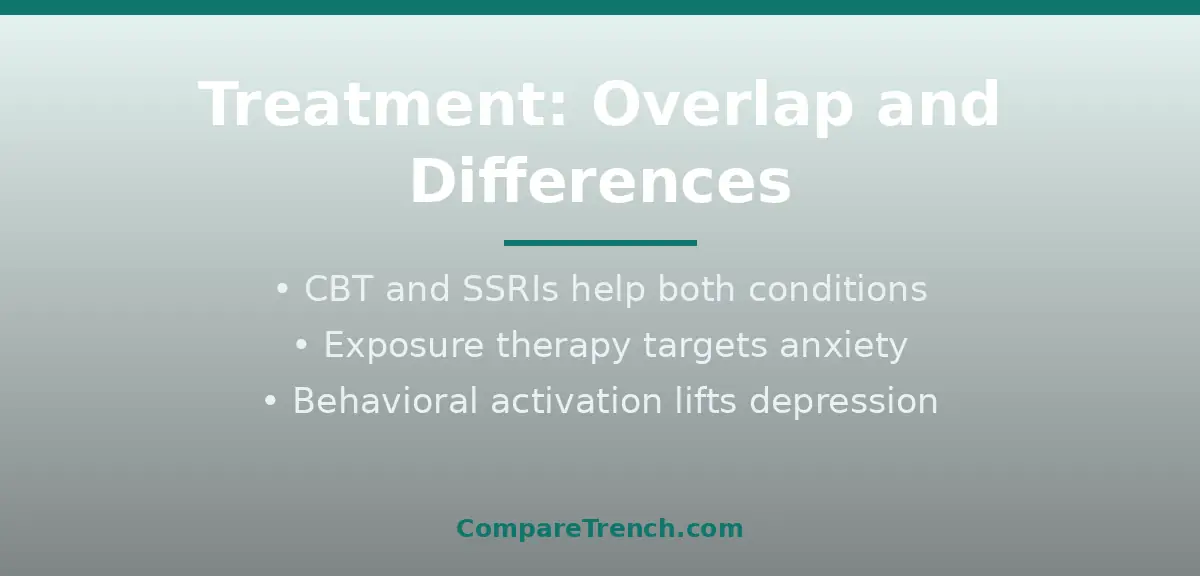
- Cognitive behavioral therapy (CBT): A structured, evidence-based therapy targeting unhelpful thought patterns and avoidance — first-line for both conditions.
- SSRIs and SNRIs: These medications adjust serotonin and norepinephrine levels and are prescribed for both anxiety disorders and depression.
- Regular exercise: Consistent aerobic activity reliably reduces symptoms of both. Breathing and relaxation practices that calm the nervous system also help — techniques touching on the mechanics of ventilation and respiration often appear in anxiety-management programs.
- Sleep hygiene and routine: Stabilizing sleep schedules and daily structure supports recovery from both.
Where treatment diverges
Exposure therapy is central to anxiety treatment: gradually facing feared situations to retrain the threat response. For depression, behavioral activation — deliberately scheduling meaningful activities to rebuild motivation — is the key strategy. Medication differs too: beta-blockers are sometimes used for performance anxiety but not depression, while certain antidepressants are chosen for their energizing effects. In severe, treatment-resistant depression, options such as electroconvulsive therapy may be considered; these have no role in anxiety disorders.
Anxiety vs Depression: When to Seek Which Kind of Help
The question behind this article is rarely academic — most readers want to know what to do about what they’re feeling.
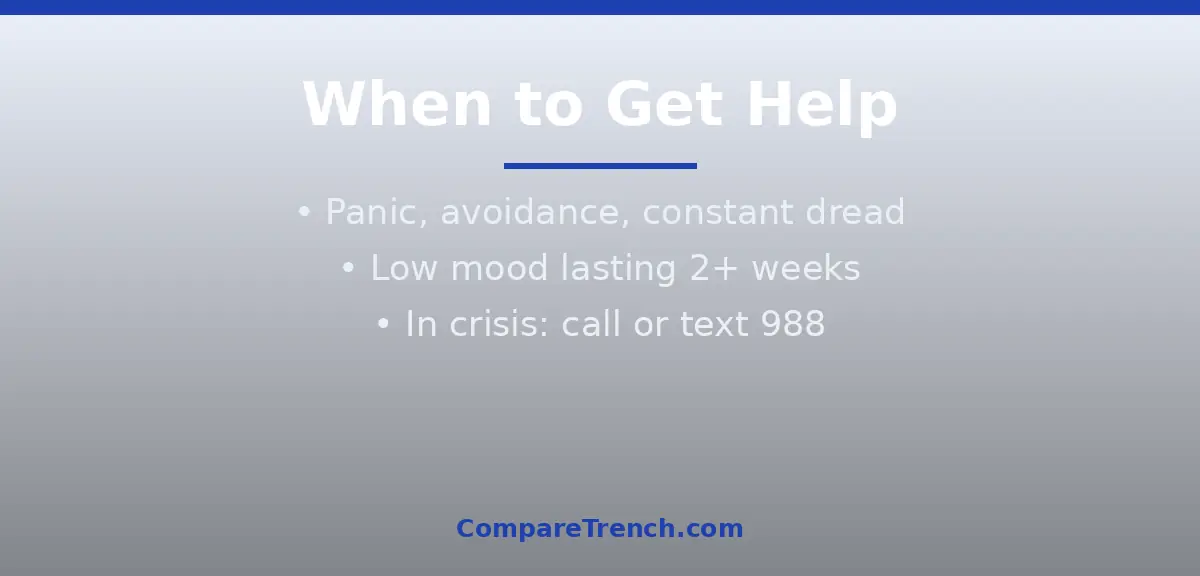
Seek help for anxiety if worry is consuming hours of your day, you are avoiding situations that matter to you, or you experience panic attacks. A primary-care doctor or a therapist experienced in anxiety disorders is the right starting point — exposure-based CBT is the gold standard.
Seek help for depression if low mood or loss of interest has lasted two weeks or more, you are withdrawing from people, or basic self-care feels impossibly hard. A primary-care doctor can screen for medical causes first; a therapist or psychiatrist can then tailor therapy, medication, or both. Note that hormonal and reproductive changes sometimes overlap with mood symptoms — our comparison of implantation and period symptoms can help rule out unrelated causes.
Seek help immediately — a crisis line, emergency services, or a trusted person — if you or someone you know is having thoughts of suicide or self-harm. In the United States, call or text 988 at any time; similar helplines exist in most countries. Such thoughts can occur with depression, with severe anxiety, or with both, and they always deserve an urgent, compassionate response.
If you are unsure which condition fits, say so openly. “I can’t tell whether this is anxiety or depression” is a perfectly valid opening line — distinguishing the two is the clinician’s job. Conditions people are embarrassed to name still deserve straightforward, judgment-free care — a lesson medicine keeps relearning, including with stigmatized topics like those in our syphilis and herpes comparison.
Frequently Asked Questions
Can you have anxiety and depression at the same time?
Yes — and it is very common. A large proportion of people with an anxiety disorder also meet the criteria for depression, and vice versa. Each can intensify the other: constant worry leads to exhaustion, while depressive withdrawal creates new worries. Many treatments, including CBT and SSRIs, address both at once.
Which is worse: anxiety or depression?
Neither is objectively worse — severity depends on the individual. Some find the relentless agitation of anxiety more distressing; others find the emptiness of depression harder to bear. What matters is how much either is interfering with your life.
How can I tell if I have anxiety or depression?
Notice the pattern of your thoughts and energy. Anxiety tends to feel like fear about the future with a revved-up body; depression tends to feel like sadness or numbness with low energy. But the overlap is large enough that only a qualified clinician can make a reliable diagnosis — use these descriptions to start that conversation, not as a verdict.
Do anxiety and depression require medication?
Not always. Many people improve with therapy alone — particularly CBT — plus lifestyle changes like regular exercise and better sleep. Medication is typically recommended when symptoms are moderate to severe or therapy alone is not enough. Decide together with a doctor who knows your history.
Can lifestyle changes alone treat anxiety and depression?
Lifestyle changes — exercise, sleep hygiene, less alcohol and caffeine, social connection — genuinely help and belong in every treatment plan. For mild symptoms they can sometimes be enough. But for moderate to severe anxiety or depression they are usually insufficient on their own.
Conclusion
The difference between anxiety and depression comes down to this: anxiety is a disorder of threat — excessive fear and worry about what might happen — while depression is a disorder of mood — persistent sadness, emptiness, or loss of interest in what is happening now. They share symptoms, causes, and treatments, and they frequently appear together, but recognizing which pattern dominates your experience is a meaningful step toward the right help.
If this article resonated with you, treat it as a nudge rather than a diagnosis. Mental health conditions are among the most treatable in all of medicine — and reaching out to a doctor, therapist, crisis line, or trusted friend is a sign of clarity, not weakness.