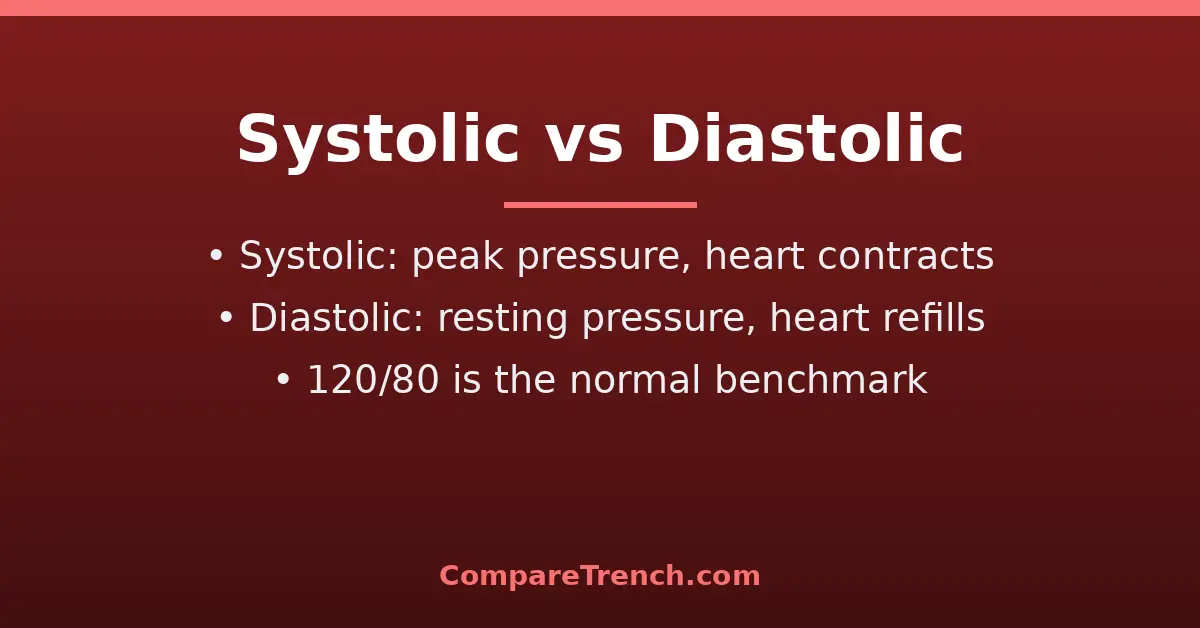
Quick Answer: Systolic pressure is the top number in a blood pressure reading: the peak pressure in your arteries when your heart contracts and pushes blood out. Diastolic pressure is the bottom number: the resting pressure in your arteries between heartbeats, while the heart refills. A reading of 120/80 means pressure peaks at 120 mmHg and falls to 80 mmHg with each beat. Both numbers matter, but for most adults over 50, the systolic number is the stronger predictor of heart disease and stroke risk.
| Feature | Systolic | Diastolic |
|---|---|---|
| Position in reading | Top (first) number | Bottom (second) number |
| Heart phase | Contraction: heart squeezes blood out | Relaxation: heart rests and refills |
| What it measures | Peak arterial pressure during a heartbeat | Minimum arterial pressure between beats |
| Normal (adults) | Below 120 mmHg | Below 80 mmHg |
| Mainly reflects | Force of the heartbeat and artery stiffness | Resistance of small blood vessels at rest |
| Rises with | Exercise, stress, age, stiff arteries | Less dramatically; steadier baseline |
| Risk signal | Stronger predictor of stroke and heart disease after 50 | Earlier warning sign in younger adults |
| Hypertension threshold | 130 mmHg or higher (stage 1) | 80 mmHg or higher (stage 1) |
| Gap between them | Called pulse pressure; widening with age signals stiffening arteries | |
What Is Systolic Blood Pressure?
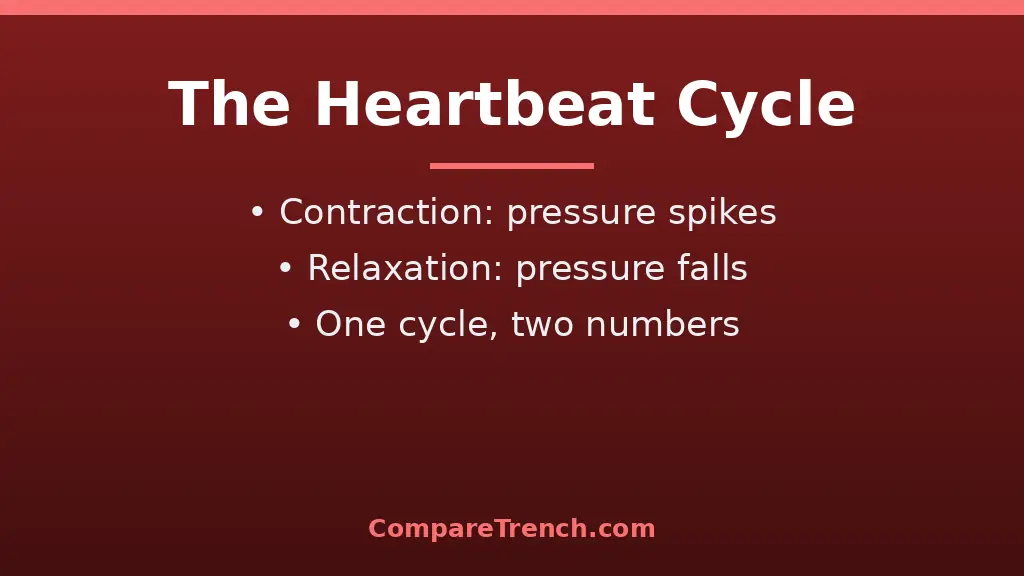
Systolic blood pressure is the higher, first number in a reading, for example the 120 in 120/80. It measures the maximum force your blood exerts against artery walls at the exact moment your heart muscle contracts and ejects blood into the aorta and onward through the arterial tree.
Think of each heartbeat as a pump stroke. When the ventricles squeeze, a surge of blood enters arteries that are elastic tubes, and pressure spikes. That spike is the systolic reading. It is the number that jumps when you sprint up stairs, feel startled, or drink too much coffee, because all of those demand a harder pump stroke.
Systolic pressure climbs naturally with age. Large arteries stiffen over decades and accumulate plaque, so they absorb less of each heartbeat’s surge and the peak pressure rises. That is why isolated systolic hypertension, a high top number with a normal bottom number, is the most common form of high blood pressure in people over 60.
Clinically, systolic gets the spotlight because research links it most strongly to stroke and heart failure risk in older adults. The American Heart Association sets the stage 1 hypertension threshold at a systolic of 130 mmHg or higher, and its guide to understanding blood pressure readings is the authoritative reference for the full category chart.
What Is Diastolic Blood Pressure?
Diastolic blood pressure is the lower, second number in a reading, the 80 in 120/80. It measures the pressure in your arteries during the resting phase between heartbeats, when the heart muscle relaxes and the chambers refill with blood.
Between beats, no new blood is being pumped, yet pressure does not fall to zero. The elastic walls of the arteries recoil inward, squeezing the blood already in the system and keeping it flowing forward to the organs. That maintained baseline pressure is the diastolic reading, and it reflects the resistance of the small arterioles throughout the body.
Unlike systolic, diastolic stays relatively steady. It rises modestly with exertion and stress but does not swing as wildly, and it actually tends to fall slightly after about age 50 as large arteries stiffen and recoil less effectively. A high diastolic in a younger adult often reflects increased peripheral resistance and can be the earliest sign of developing hypertension.
The stage 1 threshold for diastolic is 80 mmHg or higher. Doctors watch it closely in younger patients, and in pregnancy it is a key number: rising diastolic pressure can signal preeclampsia, which is why blood pressure checks are routine at prenatal visits, much like knowing the difference between implantation and a period helps with early pregnancy awareness.
Reading Your Numbers: The Categories
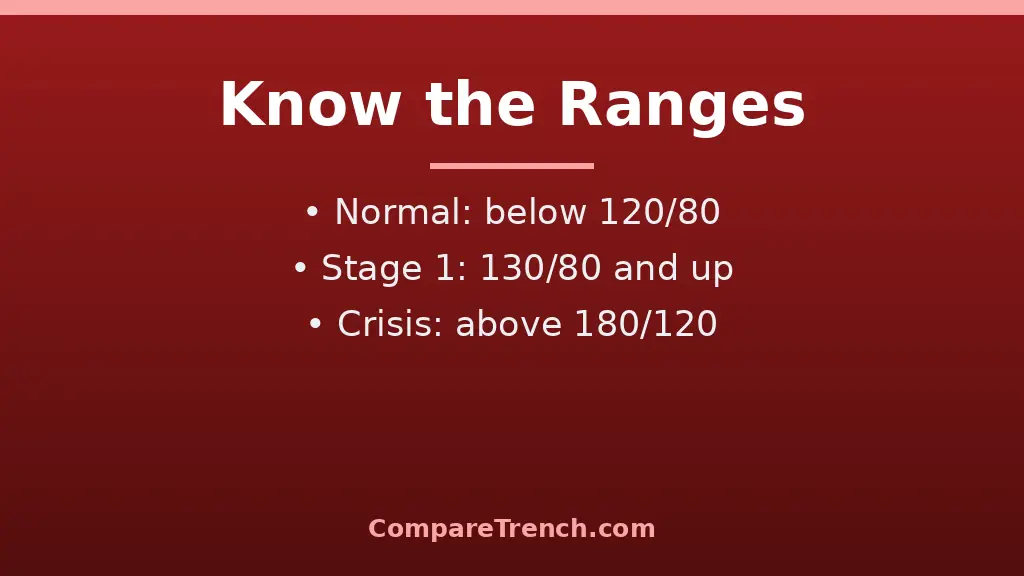
Blood pressure is written as systolic over diastolic in millimeters of mercury (mmHg), for example 118/76, spoken as “118 over 76.” The categories for adults are straightforward: normal is below 120/80; elevated is 120-129 systolic with diastolic below 80; stage 1 hypertension is 130-139 systolic or 80-89 diastolic; stage 2 is 140 or higher systolic or 90 or higher diastolic; and anything above 180/120 is a hypertensive crisis needing urgent care.
One important detail: the higher category wins. A reading of 132/78 is stage 1 hypertension because the systolic number reached that range, even though the diastolic is normal. Either number crossing its threshold is enough for the diagnosis.
A single high reading is not a diagnosis. Blood pressure fluctuates through the day, rises in clinics (white-coat effect), and spikes with caffeine, a full bladder, or crossed legs. Guidelines call for multiple readings on separate days, taken after five minutes of rest, before anyone is labeled hypertensive. Home monitoring with a validated upper-arm cuff, logging morning and evening readings for a week, gives doctors far better data than one office visit.
Medical language is full of paired terms where precision matters, and blood pressure is a prime example. The same care with definitions applies across medicine, from syphilis vs herpes to respiratory terms like ventilation vs respiration, where mixing up the two halves of a pair leads to real misunderstandings.
Pulse Pressure: Why the Gap Between the Numbers Matters
Subtract the diastolic from the systolic and you get pulse pressure: for 120/80, it is 40 mmHg. A normal pulse pressure sits roughly between 40 and 60. This gap is not just arithmetic; it describes how stiff or springy your large arteries are.
Healthy, elastic arteries stretch to absorb each heartbeat’s surge, keeping systolic moderate, then recoil to maintain diastolic. As arteries stiffen with age, atherosclerosis, or long-standing hypertension, they absorb less of the surge: systolic climbs while diastolic stays flat or even drops, and the gap widens. A pulse pressure consistently above 60 in an older adult is an independent predictor of cardiovascular events.
A very narrow pulse pressure can matter too. If systolic and diastolic sit close together, say 100/80, it can signal that the heart is pumping less forcefully, seen in heart failure or significant blood loss. Context decides whether a narrow gap is athletic fitness or a warning sign.
You cannot change pulse pressure directly; it follows from the same habits that control both numbers. But tracking it over years adds insight a single reading misses: a steadily widening gap tells your doctor your arteries are stiffening even if neither number has crossed a threshold yet.
Which Number Matters More?
The honest answer depends on age. For decades, doctors focused on diastolic, partly because early drug trials targeted it. Large studies have since flipped the emphasis: for most adults, especially past 50, systolic is the stronger predictor of stroke, heart attack, and heart failure. The force of each heartbeat pounding against stiff arteries does the most damage.
In younger adults, the pattern reverses. Diastolic elevation is often the first abnormality, reflecting increased vascular resistance before arteries have stiffened. A 35-year-old with 118/88 deserves attention even though the “top number” looks fine; ignoring diastolic because systolic is normal misses early hypertension.
The landmark finding, from an analysis of 36 million readings in over a million adults, was that both numbers independently predict risk: systolic of 130+ raised event risk, and so did diastolic of 80+. The takeaway is not to pick a favorite number but to respect both, with the emphasis shifting from diastolic to systolic as you age.
Genetics research is now digging into why some people develop hypertension young, studying how gene expression influences vascular tone, work where distinctions like RNA vs mRNA actually matter to the scientists involved. For the rest of us, the practical message is simpler: know both numbers, track them over time, and act when either drifts upward.
How to Measure Accurately at Home
Most “high” readings are measurement errors, not hypertension. Sit with your back supported, feet flat, arm resting at heart level, and the cuff on bare skin, not over a sleeve. Rest five minutes first, avoid caffeine, exercise, and smoking for 30 minutes beforehand, and empty your bladder. Talking during the measurement can add 10 points.
Take two readings a minute apart and average them. Measure at consistent times, typically morning before medication and evening before dinner, and log a week’s worth before drawing conclusions. Bring the log, or the monitor itself, to appointments so the doctor can check the device against the office equipment.
Cuff size is the most common hardware mistake. A cuff too small for the arm reads artificially high; too large reads low. Measure your upper arm and match it to the cuff’s printed range. Wrist monitors are convenient but fussier about position; validated upper-arm devices remain the gold standard for home use.
When cardiologists need structural detail beyond pressure, they image the heart itself, viewing it in standardized anatomical planes, a world where terms like the difference between sagittal and midsagittal planes stop being textbook trivia and start guiding real diagnoses.

Which Number Should You Watch More Closely?
Watch both, but weight them by age. Under 40, pay special attention to diastolic creeping toward 80; it is often the first signal. Over 50, systolic becomes the number that drives most treatment decisions, since controlling it delivers the biggest reduction in stroke and heart failure risk.
Do not chase a single perfect reading. Trends beat snapshots: a systolic drifting from 112 to 128 over five years tells a more important story than one 138 on a stressful day. Home logs reveal those trends; sporadic clinic readings hide them.
Lifestyle moves both numbers together. Losing excess weight, cutting sodium, exercising most days, limiting alcohol, quitting smoking, and sleeping well each shave a few points off both systolic and diastolic, and the effects stack. When lifestyle is not enough, medication targets both numbers as well; there is no drug that lowers only one.
Know the emergency line: above 180/120, wait a few minutes and re-measure. If it stays there and you have chest pain, shortness of breath, vision changes, weakness, or trouble speaking, call emergency services immediately. Without symptoms, contact your clinician the same day. Either way, that reading is not a “watch and wait” situation.
Frequently Asked Questions
What is a normal systolic and diastolic blood pressure?
For most adults, normal is below 120 systolic and below 80 diastolic. Elevated is 120-129 systolic with diastolic under 80. Stage 1 hypertension begins at 130 systolic or 80 diastolic, and stage 2 at 140 systolic or 90 diastolic. Targets can differ for older adults or people with conditions like diabetes, so confirm your personal goal with your clinician.
Is it bad if systolic is high but diastolic is normal?
This pattern, called isolated systolic hypertension, is the most common form of high blood pressure in older adults and it still raises stroke and heart failure risk. It reflects stiffening arteries rather than a benign quirk, so it is treated, not ignored. In younger people it is less common and warrants a workup for secondary causes.
Can diastolic be too low?
Yes. Diastolic below 60 can reduce blood flow to the heart muscle itself, since coronary arteries fill mainly during the resting phase. Overly aggressive treatment that drives diastolic very low in older adults with stiff arteries is a known concern, which is why doctors balance both numbers when adjusting medication.
Why does my blood pressure differ between arms?
A small difference, under 10 mmHg, is normal and varies with position and timing. A consistent gap above 10-15 mmHg can signal circulation problems in one arm and should be mentioned to your doctor. Standard advice: measure both arms initially, then use the arm with the higher reading for routine tracking.
Does anxiety raise systolic or diastolic more?
Both, but systolic usually jumps more because adrenaline makes the heart beat harder and faster. This is the classic white-coat effect: a calm home reading of 118/76 can easily be 145/85 in a clinic. It is one reason home monitoring and 24-hour ambulatory monitoring exist, to separate true hypertension from situational spikes.

Conclusion
The difference between systolic and diastolic is the difference between the heartbeat’s push and its pause: systolic captures peak pressure as the heart contracts, diastolic captures resting pressure as it refills. Together they describe the full pressure cycle, and the gap between them adds information about arterial stiffness.
Both numbers deserve your attention, with diastolic often signaling first in younger adults and systolic driving risk after 50. Measure correctly, track trends rather than single readings, and treat sustained elevation of either number as a reason to act, through lifestyle, medication, or both, in partnership with your clinician.