Quick Answer: Hardwood flooring is made from real solid wood — beautiful, long-lasting (50+ years), and refinishable, but expensive ($5–$15+ per sq ft) and vulnerable to moisture. Laminate is a synthetic photographic layer over a fiberboard core — much cheaper ($1–$6 per sq ft), highly scratch-resistant, and DIY-friendly, but it cannot be refinished and adds less resale value. Choose hardwood for timeless value in living areas; choose laminate for budget-friendly durability in busy households.
Few home decisions spark as much debate as flooring. Hardwood has been the prestige choice for centuries — warm underfoot, rich with natural grain, and a proven boost to resale value. Laminate, the challenger, promises the look of wood at a fraction of the price, with a tough wear layer that shrugs off pets, kids, and dropped toys.
The difference between hardwood and laminate flooring goes far beyond price. They are fundamentally different materials with different lifespans, maintenance needs, and ideal rooms. This guide compares them head to head so you can choose with confidence — whether you are renovating one room or flooring a whole house.
Hardwood vs Laminate Flooring: At a Glance
| Feature | Hardwood Flooring | Laminate Flooring |
|---|---|---|
| Material | 100% real wood (solid planks or engineered veneer) | Photographic image layer over HDF core |
| Appearance | Authentic grain, unique per plank | Realistic printed wood/stone look |
| Material cost | $5–$15+ per sq ft | $1–$6 per sq ft |
| Installed cost | $10–$25 per sq ft | $3–$13 per sq ft |
| Scratch/dent resistance | Moderate; can scratch but refinishable | High; tough wear layer |
| Water resistance | Poor; warps with moisture | Fair to good; not waterproof |
| Refinishing | Yes, multiple times | No — damaged planks are replaced |
| Installation | Nail/glue down; usually professional | Click-lock floating; DIY-friendly |
| Lifespan | 50–100 years | 10–30 years |
| Resale value | High; adds 2.5–5% to home value | Low to moderate |
| Feel underfoot | Solid, warm, substantial | Harder, can sound hollow |
| Maintenance | Moderate; periodic refinishing | Low; sweep and damp mop |
What Is Hardwood Flooring?
Hardwood flooring is exactly what it sounds like: planks milled from real timber — oak, maple, walnut, hickory, cherry, and exotics like Brazilian cherry. Solid hardwood is a single piece of wood, typically 3/4 inch thick, nailed or stapled to a subfloor. Engineered hardwood sandwiches a real hardwood veneer over layers of plywood, making it more dimensionally stable in humid conditions while still showing genuine wood on top.
What sets hardwood apart is authenticity. Every plank has unique grain, color variation, and texture that no print can fully replicate. It can be sanded and refinished multiple times over its life — a scratched oak floor can look brand new after refinishing, and the color can even be changed with a new stain. That renewability is why hardwood floors in century-old homes still look magnificent.
What Is Laminate Flooring?
Laminate is a four-layer synthetic sandwich: a stabilizing backing, a high-density fiberboard (HDF) core, a high-resolution photographic image layer, and a transparent aluminum-oxide wear layer on top. The image layer is printed to mimic wood, stone, or tile — modern printing is good enough that guests often cannot tell laminate from real wood at a glance. Telling similar-looking things apart is a skill that transfers: our cavatappi versus cellentani guide shows how tiny visual details separate near-identical pastas, and the same careful eye helps when comparing flooring samples.
Laminate’s superpower is its wear layer. Aluminum oxide is extraordinarily hard, making laminate highly resistant to scratches, dents, fading, and stains — in many ways tougher day-to-day than real wood. Most laminate uses click-lock edges that snap together over an underlayment as a “floating floor,” with no nails or glue, which is why it is the darling of DIY renovators. The trade-off: the wear layer cannot be sanded or refinished. When laminate is damaged or simply worn out, planks get replaced, not restored.
Cost: Upfront and Over Time
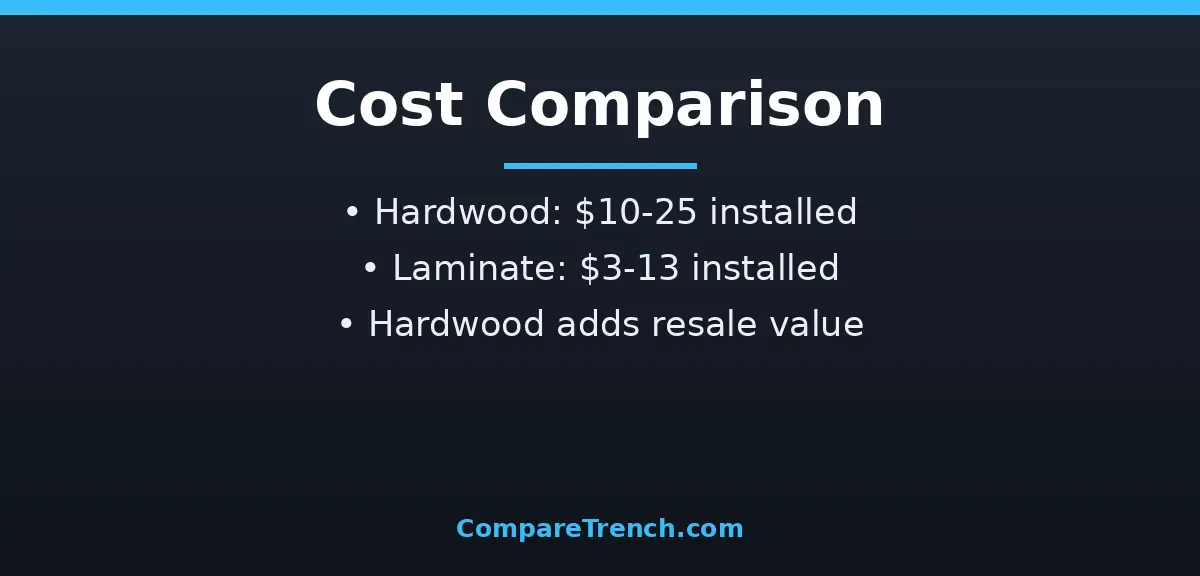
The price gap is the most dramatic difference between hardwood and laminate flooring. Laminate materials run $1–$6 per square foot, with total installed costs of roughly $3–$13 per square foot — and DIY installation can push that even lower. Hardwood materials start around $5 per square foot and climb past $15 for premium species, with professional installation bringing totals to $10–$25 per square foot.
But lifetime cost tells a more nuanced story. Hardwood’s 50-to-100-year lifespan, punctuated by refinishing every 7–10 years in heavy-traffic areas, amortizes the upfront cost over generations — and it adds an estimated 2.5–5% to a home’s resale value. Laminate needs full replacement every 15–25 years. Over a 30-year stay, a homeowner might buy laminate twice, narrowing the gap — though rarely closing it entirely. For rental properties or starter homes, laminate’s low entry cost usually wins; for forever homes, hardwood’s economics improve with every decade.
Durability and Water Resistance
Durability is where the two trade blows. Laminate’s wear layer resists scratches, dents, and fading better than most wood finishes — pet claws, chair legs, and dropped objects leave fewer marks. Hardwood, especially softer species like pine, dents and scratches more easily; harder species like hickory and white oak hold up better. The crucial difference is recoverability: hardwood damage can be sanded away, while laminate damage is permanent (though individual planks can be swapped).
Water is hardwood’s nemesis. Standing water, leaks, and high humidity can warp, cup, or stain real wood — which is why hardwood is a poor choice for bathrooms and risky in kitchens and basements. Laminate handles everyday spills better thanks to its sealed surface, and water-resistant laminate variants exist, but it is not waterproof either: water seeping into seams can swell the HDF core. Neither belongs in a bathroom; for wet areas, tile or vinyl remains the right answer.
Installation: Professional vs DIY
Installing solid hardwood is skilled work: acclimating the wood to your home’s humidity, nailing or gluing planks, then sanding, staining, and sealing unfinished floors on site. It takes days, creates dust, and usually requires professionals — though prefinished engineered hardwood narrows the gap. Expect the room to be unusable during the process.
Laminate is among the most DIY-friendly floors available. Click-lock planks float over most existing floors (even old vinyl or tile) with just an underlayment, basic tools, and a weekend. No sanding, no staining, no curing time — you can walk on it immediately. That ease also makes laminate the faster, less disruptive choice for occupied homes. If you enjoy hands-on home projects the way others enjoy perfecting a recipe — see our espresso versus latte guide for another craft worth mastering — laminate installation is genuinely satisfying weekend work.
Maintenance and Lifespan
Day-to-day, laminate is easier: sweep or vacuum regularly, damp-mop occasionally, and avoid soaking it. No waxing, no special polishes. Hardwood needs similar routine care plus vigilance — wipe spills promptly, use felt pads under furniture, maintain stable indoor humidity (35–55%) to prevent gapping or cupping, and recoat or refinish when the finish wears thin. Think of it like maintaining any long-term system: steady small habits beat occasional big interventions, a principle that applies whether you are caring for floors or distinguishing house from techno by their steady underlying patterns.
The lifespan difference is stark: 50–100 years for hardwood versus 10–30 for laminate, depending on quality and traffic. A well-kept oak floor can outlive its owners; laminate is a finish with an expiration date. That said, 20 years of good-looking, low-maintenance laminate in a busy family home is nothing to dismiss — floors serve the life you actually live, not an idealized one.
Resale Value and Homebuyer Perception
Real estate agents consistently report that hardwood floors help homes sell faster and for more — buyers perceive them as premium, permanent, and desirable. Laminate is viewed neutrally: a clean, modern finish that neither excites nor repels, though cheap-looking laminate can be a mild negative. If you are renovating to sell within a few years, hardwood in the main living areas is one of the highest-ROI improvements you can make.
If you are renovating to live, the calculus shifts to your household. Kids, large dogs, and high heels punish floors; laminate’s scratch resistance and replaceability are genuine quality-of-life features. Many homeowners split the difference: hardwood in living rooms and bedrooms, durable alternatives in entries, kitchens, and playrooms. Matching the floor to the room — much like matching a drink to the moment in our cappuccino versus latte comparison — is the mark of a thoughtful choice.
Which Rooms Suit Each Flooring?
Hardwood shines in living rooms, dining rooms, bedrooms, and hallways — dry, visible spaces where its beauty pays off daily and moisture risk is low. It is the classic choice for formal areas and anywhere you want warmth and prestige.
Laminate earns its keep in busy family zones: playrooms, home offices, finished basements (with a moisture barrier), and rental units. Modern water-resistant laminate can work in kitchens, though tile or luxury vinyl remains safer. Neither hardwood nor standard laminate belongs in full bathrooms or laundry rooms — and engineered hardwood, while more stable than solid, is still real wood with real limits. For whole-house cohesion on a budget, many homeowners run one laminate style throughout, gaining visual flow at a fraction of hardwood’s cost.
Hardwood vs Laminate: When to Choose Which
Choose hardwood if you value authenticity, plan to stay long-term, want maximum resale value, and can protect the floors from moisture and heavy abuse. It is the “buy it for life” option — expensive upfront, beautiful for decades, and renewable through refinishing. Homes with hardwood simply feel different underfoot, and buyers notice.
Choose laminate if budget matters most, your household is hard on floors (kids, pets), you want DIY installation, or you need a fast, low-disruption renovation. It delivers 80% of the look for 30–40% of the cost, with better scratch resistance and near-zero maintenance. Just go in with open eyes: it will not add the same resale premium, and in 15–25 years you will replace it rather than refinish it. For authoritative guidance on wood flooring care and standards, the National Wood Flooring Association at woodfloors.org is the industry’s reference.
FAQ
Can laminate flooring look like real hardwood?
Modern high-end laminate is remarkably convincing — embossed textures align with the printed grain, and bevelled edges mimic plank seams. Most visitors cannot tell at a glance. Up close and underfoot, differences emerge: laminate feels harder, sounds slightly hollow when walked on, and repeats its printed pattern every several planks, while real wood never repeats.
Is laminate flooring waterproof?
Standard laminate is water-resistant, not waterproof — it handles spills wiped up promptly but swells if water seeps into seams. Waterproof and water-resistant laminate lines exist with sealed edges and water-repellent cores, and they perform genuinely well in kitchens. For bathrooms, choose tile or sheet vinyl instead.
Can you refinish laminate flooring?
No. Refinishing requires sanding through the finish to fresh material, and laminate’s design layer is a thin printed image — sanding destroys it. Deep scratches or worn areas mean replacing the affected planks (keep spare boxes from the original batch for color matching) or eventually replacing the floor.
Which is better for pets: hardwood or laminate?
Laminate, in most cases. Its aluminum-oxide wear layer resists claw scratches far better than wood finishes, and accidents are easier to clean. Hardwood can work with diligent nail trimming and immediate cleanup, but pet-heavy households will refinish sooner. Luxury vinyl plank is another pet-friendly alternative worth considering.
Does laminate flooring increase home value?
Modestly. Quality laminate in good condition is viewed as a neutral-to-positive finish — far better than worn carpet, but it does not command the premium buyers pay for real hardwood. If resale value is the goal, hardwood in main living areas delivers the strongest return; laminate is best justified by its low cost and practicality while you live there.
Conclusion
The difference between hardwood and laminate flooring is the difference between an heirloom and a workhorse. Hardwood offers unmatched authenticity, a century-long lifespan, refinishing renewability, and the strongest resale value — at a steep price and with real vulnerability to water and scratches. Laminate offers convincing looks, superior scratch resistance, easy DIY installation, and unbeatable upfront value — with a finite lifespan and no refinishing option.
Neither is universally better; the right choice depends on your budget, your household, your timeline, and the room in question. Match the floor to the life you live, and whichever you choose, proper installation and basic maintenance will keep it looking good for years. And remember that surface impressions can mislead — just as our southpaw versus orthodox breakdown shows, what looks similar at first glance often differs fundamentally underneath.