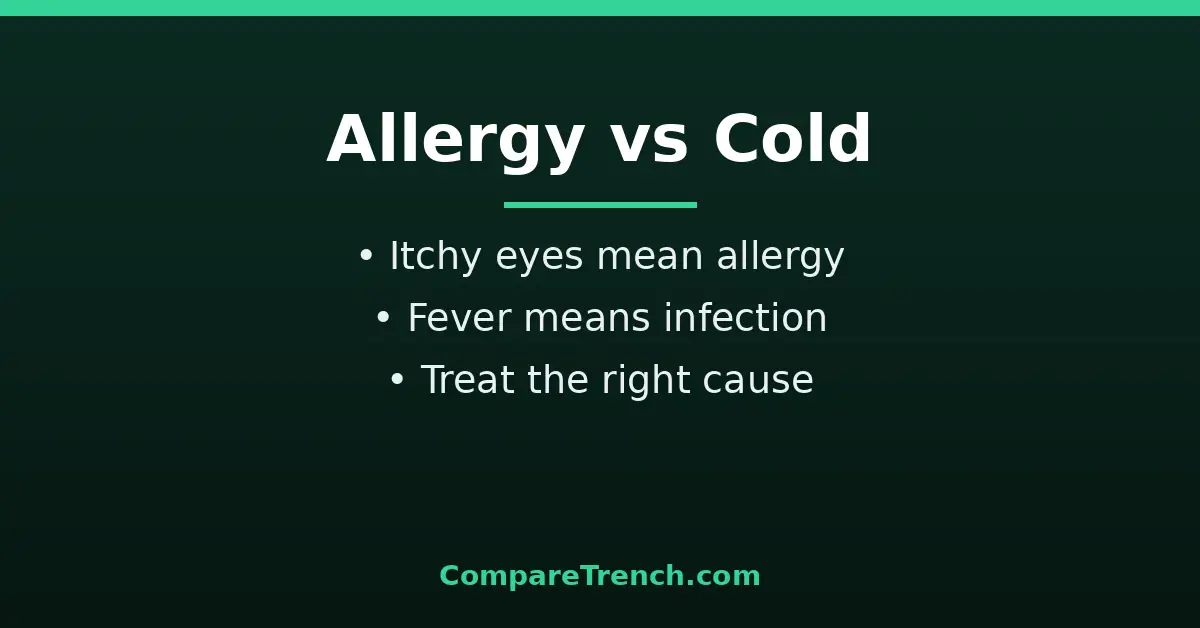
Quick Answer: A cold is a viral infection that arrives gradually, lasts 3–10 days, and often brings a sore throat, cough, and sometimes a mild fever. An allergy is an immune overreaction to harmless substances like pollen or dust — it starts quickly after exposure, causes itchy/watery eyes and sneezing fits, never causes fever, and lasts as long as you are exposed (weeks or recurring). The telltale signs: itchy eyes point to allergies; fever, body aches, and thick yellow-green mucus point to a cold.
Every spring and fall, millions of people ask the same question while reaching for a tissue: is this a cold, or are my allergies acting up? The confusion is understandable — both bring sneezing, a runny nose, and congestion. But they are fundamentally different conditions: one is an infection you catch, the other is an immune misfire triggered by your environment.
Getting the answer right matters because the treatments are completely different. Decongestants and rest help a cold; antihistamines and allergen avoidance help allergies — and using the wrong remedy wastes days of misery. This guide breaks down the difference between allergy and cold symptom by symptom, so you can identify what you have and treat it correctly.
Allergy vs Cold: At a Glance
| Feature | Allergy | Common Cold |
|---|---|---|
| Cause | Immune response to allergens (pollen, dust, pets) | Viral infection (rhinovirus and 200+ others) |
| Onset | Immediate after exposure | Gradual, over 1–3 days |
| Fever | Never | Sometimes (usually mild) |
| Itchy, watery eyes | Usually | Rarely |
| Sneezing | In rapid fits | Occasional |
| Sore throat | Rarely | Usually |
| Cough | Sometimes (dry) | Usually |
| Body aches | Never | Sometimes |
| Mucus | Thin, clear, watery — stays clear | Starts clear, often turns yellow/green |
| Duration | Weeks; recurs with exposure | 3–10 days, then resolves |
| Timing pattern | Seasonal or year-round, predictable | Anytime, often winter |
| Contagious | No | Yes |
What Causes Each Condition
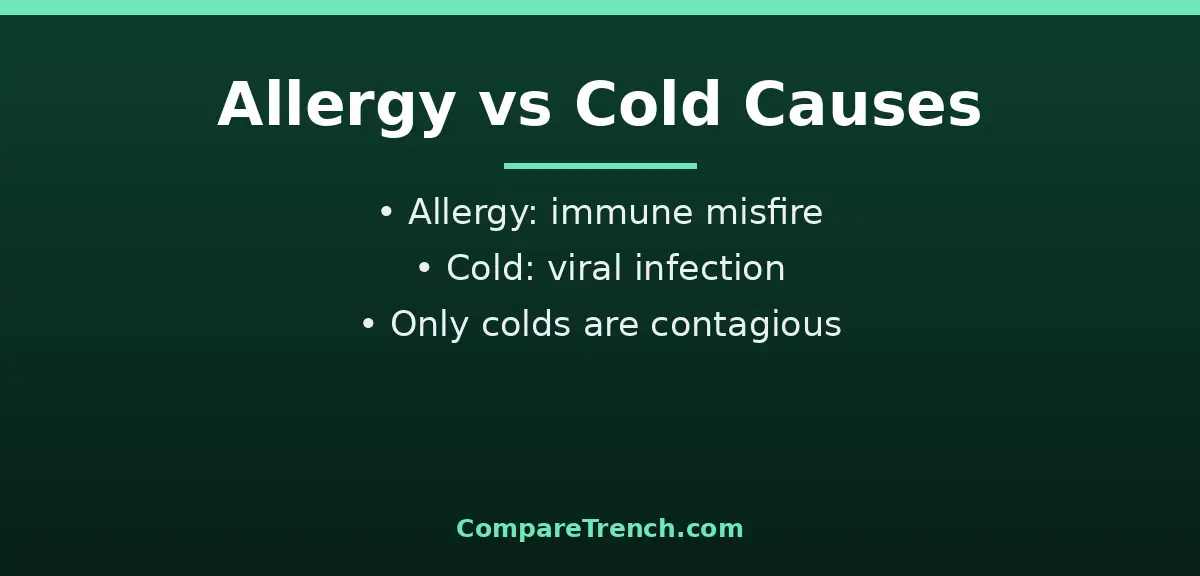
A cold is an infection. One of more than 200 viruses — most commonly rhinovirus — invades your nasal passages and upper airways, and your immune system responds with inflammation: the runny nose, congestion, and sore throat are collateral damage from your body fighting the invader. You catch it from another person, through droplets or contaminated surfaces.
An allergy is not an infection at all — nothing is invading. Instead, your immune system mistakes a harmless substance (pollen, dust mites, pet dander, mold) for a dangerous pathogen and launches an outsized defense, releasing histamine and other chemicals. The sneezing, itching, and watery eyes are that misfiring defense. You cannot “catch” allergies from someone, and they are not caused by germs — which is the same core principle behind the virus versus bacteria distinction: different causes demand different treatments.
The Three Fastest Clues
If you want a quick read before diving into details, three symptoms separate the two almost every time. First, itchy eyes: allergies very commonly cause itchy, watery, sometimes puffy eyes, while colds rarely do. If your eyes itch, think allergy. Second, fever: colds sometimes bring a mild fever; allergies never cause fever. If you have a temperature, it is not allergies.
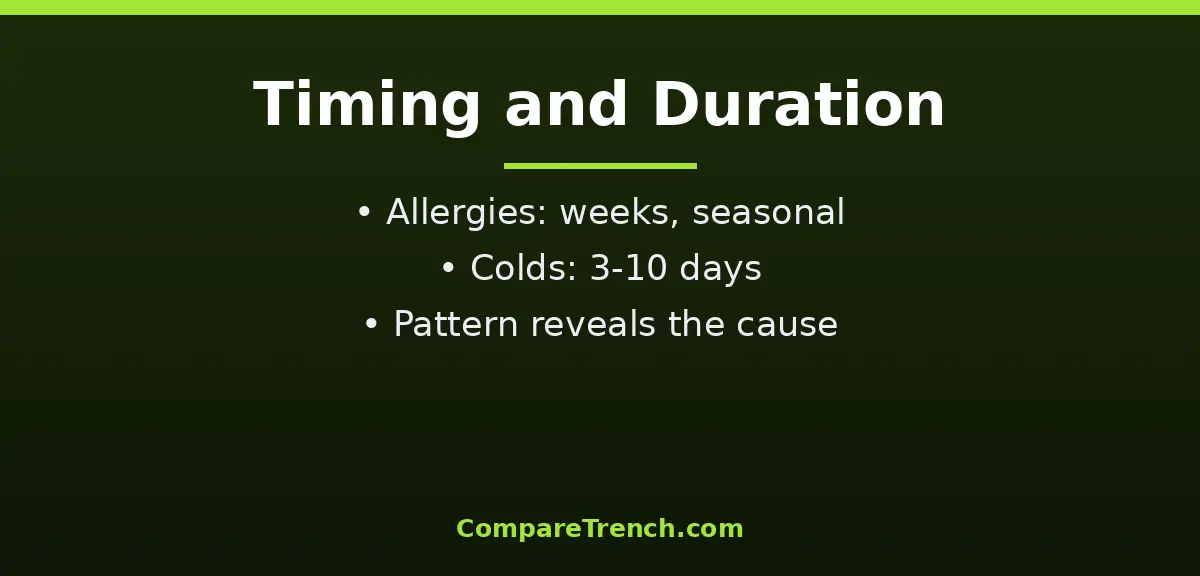
Third, timing and pattern. Allergies strike quickly after exposure — you walk into a dusty room or step outside on a high-pollen morning and symptoms start within minutes — and they persist as long as exposure continues, sometimes for weeks. They also recur predictably: the same “cold” every April is almost certainly allergies. Colds build gradually over days, peak, and then resolve within about ten days, never to return in the same form.
Symptom-by-Symptom Comparison
Sneezing and Runny Nose
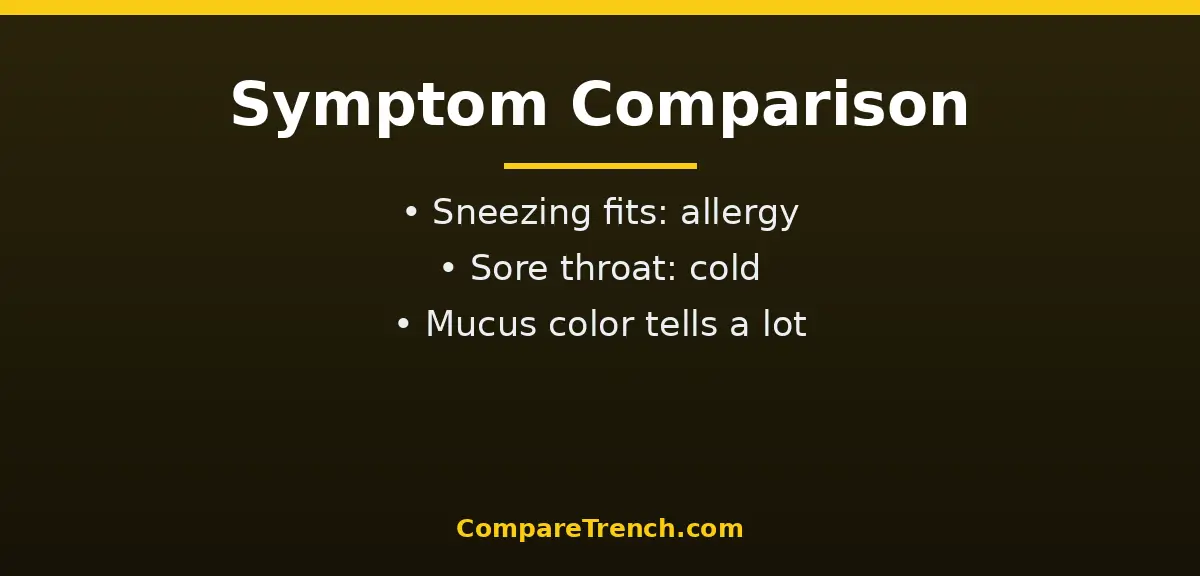
Both cause sneezing and a runny nose, but the character differs. Allergy sneezing comes in rapid-fire fits — five, ten sneezes in a row — especially after exposure. Cold sneezing is occasional. The mucus tells an even clearer story: allergy mucus stays thin, clear, and watery for the entire episode, while cold mucus often starts clear and turns thick, cloudy, yellow, or green after a few days as immune cells accumulate.
Sore Throat and Cough
A sore throat is a cold’s calling card and an allergy rarity. With allergies, throat irritation comes mainly from post-nasal drip and feels scratchy rather than truly sore. Cough follows the same split: colds commonly produce a cough (often with mucus), while allergies cause at most a dry, occasional cough from drip irritation. If you are coughing up mucus, you are in cold territory.
Eyes, Ears, and Face
The eyes are allergy territory: itching, watering, redness, puffy lids, and dark circles (“allergic shiners”) from congestion. Colds leave the eyes mostly alone. Allergies can also cause itching of the nose, throat, and roof of the mouth — an itch you feel driven to scratch. Colds, meanwhile, are more likely to cause sinus pressure, ear fullness, and general achiness. The ventilation and respiration pathways explain why both conditions congest the nose but feel so different doing it.
Duration and Timing Patterns
A cold is a self-limited event: symptoms appear over a few days, peak around day two or three, and fade within 3–10 days (a lingering cough may stretch to two weeks). Then it is over — until the next virus comes along. Allergies have no such arc: symptoms continue for as long as you are exposed to the trigger, which can mean the entire pollen season, and they return every time the trigger returns.
Seasonality is a powerful diagnostic tool. Symptoms that arrive every spring when trees pollinate, every fall during ragweed season, or every time you visit a friend with a cat are allergies, full stop. Year-round morning congestion and sneezing often points to dust mites or indoor mold. Colds cluster in winter but can strike anytime — and unlike allergies, each cold is a distinct, finite episode.
Treatment: Completely Different Toolkits
This is where the correct diagnosis pays off. Cold treatment is supportive: rest, fluids, saline rinses, honey for cough, and pain relievers for aches and sore throat. The goal is comfort while your immune system finishes the job in about a week. Antibiotics do nothing for colds.
Allergy treatment targets the overactive immune response: oral antihistamines (cetirizine, loratadine, fexofenadine) block histamine’s effects; nasal steroid sprays (fluticasone) calm nasal inflammation and are the most effective single treatment for persistent symptoms; saline rinses wash allergens out. Just as important is avoidance — keeping windows closed during high pollen, showering after being outdoors, using HEPA filters, and encasing pillows against dust mites. For severe or year-round allergies, an allergist can offer immunotherapy (allergy shots or tablets) that gradually retrains the immune system. People managing chronic conditions alongside allergies should understand how systemic inflammation connects to circulation, covered in our arteries versus veins guide.
Can You Have Both at Once?
Yes — and it is miserable. Allergies inflame and swell the nasal passages, which can make you more susceptible to catching a cold, and the two together produce a confusing blend: itchy eyes plus fever, or sneezing fits plus thick mucus. Allergic rhinitis can also lead to sinus infections when congested sinuses trap bacteria.
If your “allergies” suddenly change character — fever appears, mucus turns yellow-green, symptoms worsen after ten days — a cold or sinus infection has likely joined the party. Treat each component: continue allergy medication and add cold-style supportive care. When in doubt, a clinician (or a simple symptom timeline: what started when?) can sort it out. The CDC’s common cold overview is a solid reference for the viral side of the picture.

Allergy vs Cold in Children
The distinction matters even more for kids, who catch 5–6 colds a year on average. Persistent “colds” that never quite clear — a constantly runny nose, mouth breathing, snoring, or frequent throat-clearing — are often undiagnosed allergies, especially if they follow a seasonal pattern. Children with allergies may also develop a crease across the nose from repeated upward rubbing (“allergic salute”) and chronic dark circles.
Pediatric treatment mirrors the adult approach with child-appropriate dosing: saline rinses, age-approved antihistamines, and environmental control. Because children cannot always describe itching versus soreness, watch behavior: frequent eye-rubbing points to allergies; clinginess with fever points to a cold. When symptoms persist beyond two weeks or recur monthly, a pediatrician or allergist visit is worthwhile — chronic untreated allergies affect sleep, school performance, and can worsen asthma.
When to See a Doctor
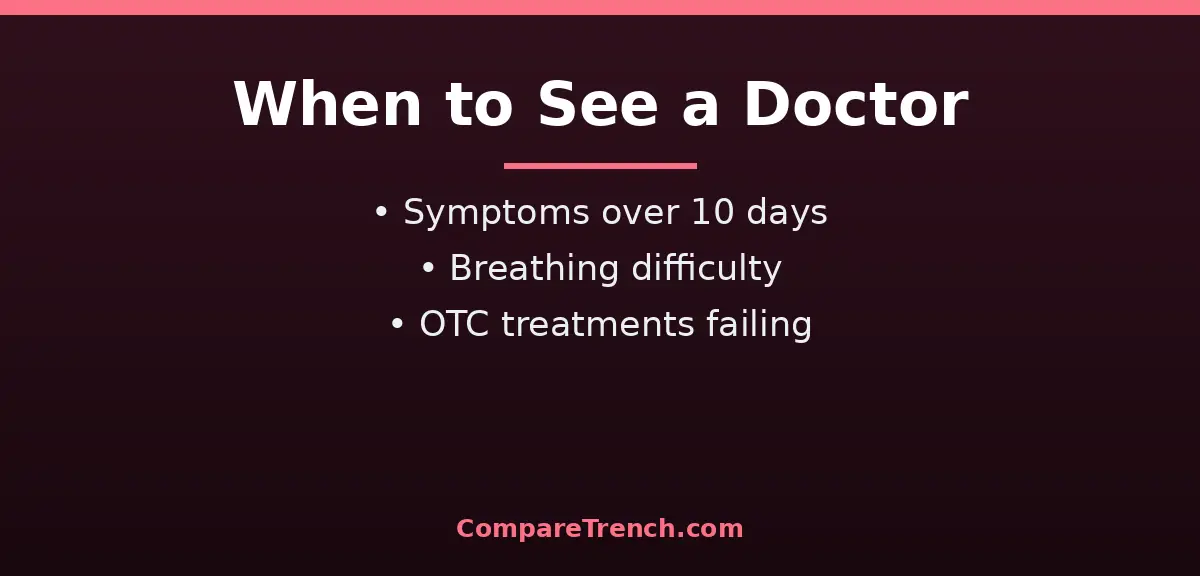
See a clinician for cold-like symptoms if they last more than ten days without improving, if fever exceeds 101.3°F (38.5°C) for more than three days, if you have severe sinus pain, shortness of breath, or a cough producing significant mucus. For allergy-like symptoms, seek care if over-the-counter treatments fail after a couple of weeks, if symptoms disrupt sleep or work, if you develop wheezing or breathing difficulty (possible asthma overlap), or if you want to discuss immunotherapy for long-term relief.
FAQ
Can allergies cause a fever?
No. This is one of the most reliable rules in the book: allergies never cause fever. If you have a temperature of 100.4°F (38°C) or higher alongside your sniffles, you are dealing with an infection — a cold, flu, or similar — not allergies. (Note: overheating from being bundled up is not a true fever.)
Why do allergies make my eyes itch but colds don’t?
It comes down to histamine. In allergies, airborne allergens land directly on the conjunctiva (the eye’s surface), triggering local histamine release — hence itching, watering, and redness. Colds are viral infections of the nasal passages and throat; the virus rarely involves the eyes, so itching is uncommon. Eye symptoms are therefore one of the best single discriminators.
Can allergies turn into a cold?
Allergies cannot turn into a cold — they are different processes — but allergies can pave the way for one. Chronically inflamed, congested nasal passages are more vulnerable to viral invasion, so allergy sufferers do catch colds. The two can also overlap in time, which is why a sudden change in symptom character (new fever, colored mucus) during allergy season deserves attention.
How do I know if it’s allergies or a sinus infection?
Duration and pain are the clues. Allergies cause itching, clear mucus, and sneezing without significant facial pain. A sinus infection (often following a cold) brings facial pressure or pain, thick yellow-green mucus, sometimes fever, and symptoms persisting beyond ten days or worsening after initial improvement. Sinus infections may need medical treatment; allergies do not.
What’s the best treatment for allergies vs a cold?
For allergies: daily antihistamines and/or nasal steroid sprays, plus allergen avoidance (HEPA filters, closed windows, showering after outdoor exposure). For colds: rest, fluids, saline rinses, and patience — the immune system clears it in about a week. Using antihistamines for a cold or antibiotics for allergies is ineffective; matching treatment to cause is everything. For related respiratory comparisons, see our syphilis versus herpes guide on telling lookalike conditions apart.
Conclusion
The difference between allergy and cold comes down to cause, clues, and course. Allergies are an immune overreaction — fast onset after exposure, itchy watery eyes, sneezing fits, clear mucus, no fever, lasting weeks. Colds are viral infections — gradual onset, sore throat, cough, sometimes fever and body aches, colored mucus, resolved in about ten days.
Learn the three fastest tells — itchy eyes, fever, and timing — and you will rarely be confused again. Distinguishing lookalike conditions by a few key signs is a broadly useful skill, as our implantation versus period comparison demonstrates in a different context. And once you know which one you have, you can reach for the treatment that actually works instead of suffering through the wrong one.