Quick Answer: A psychiatrist is a medical doctor (MD or DO) who can diagnose mental health conditions, prescribe medication, and use medical treatments. A psychologist holds a doctoral degree in psychology (PhD or PsyD) and specializes in psychotherapy (talk therapy) and psychological testing, but generally cannot prescribe medication. Many people benefit from seeing both.
When you decide to seek help for your mental health, the first question is often: who should I see? The terms psychologist and psychiatrist sound similar and both professionals treat mental health conditions, which causes a lot of confusion. Understanding the difference between a psychologist and a psychiatrist — in training, treatment approach, and what each can offer — helps you choose the right professional for your situation instead of guessing.
Psychologist vs Psychiatrist: Side-by-Side Comparison
| Feature | Psychologist | Psychiatrist |
|---|---|---|
| Core identity | Doctoral-level expert in human behavior and psychology | Licensed medical doctor specializing in mental health |
| Degree | PhD or PsyD in psychology | MD or DO, plus psychiatry residency |
| Training length | Roughly 8–10 years (undergraduate, doctorate, internship) | Roughly 12 years (undergraduate, medical school, 4-year residency) |
| Can prescribe medication? | No (in most places) | Yes |
| Primary treatment | Psychotherapy (talk therapy), psychological testing | Medication management, medical diagnosis, some psychotherapy |
| Medical procedures | Cannot order labs or perform medical procedures | Can order lab tests, physical exams, ECT or TMS in severe cases |
| Typical session | 45–60 minutes of therapy, often weekly | 15–30 minutes, often focused on medication review |
| Best suited for | Anxiety, depression, trauma, relationship issues, behavioral change | Conditions needing medication: severe depression, bipolar disorder, schizophrenia |
What Is a Psychologist?
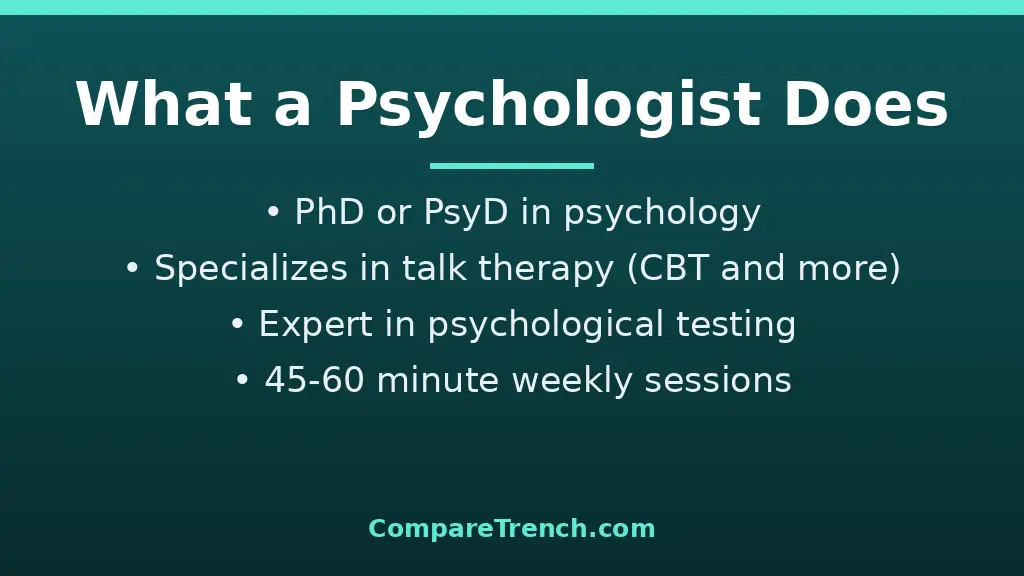
A psychologist is a mental health professional with a doctoral degree in psychology — either a PhD (Doctor of Philosophy, research-oriented) or a PsyD (Doctor of Psychology, practice-oriented). Their training centers on understanding human behavior, emotions, and thought patterns, and on evidence-based methods for changing them.
Psychologists are the specialists in psychotherapy, commonly called talk therapy. Approaches they use include cognitive behavioral therapy (CBT), which targets unhelpful thought patterns; psychodynamic therapy, which explores how past experiences shape current behavior; and humanistic or acceptance-based therapies. Sessions typically run 45–60 minutes and happen weekly or biweekly over weeks or months.
Psychologists are also the experts in psychological testing and assessment — standardized evaluations of intelligence, personality, memory, and cognitive functioning used to diagnose conditions like ADHD, learning disorders, or dementia, and to guide treatment planning.
What Is a Psychiatrist?
A psychiatrist is a medical doctor — an MD or DO — who completed medical school and then a four-year residency in psychiatry. Because they are physicians, psychiatrists understand the biological and medical side of mental health: brain chemistry, the physical effects of mental illness, and how mental and physical conditions interact.
The defining power of a psychiatrist is prescribing authority. They can prescribe antidepressants, anti-anxiety medications, mood stabilizers, and antipsychotics, then monitor effectiveness and side effects over time. They can also order blood tests, conduct physical examinations, and in severe, treatment-resistant cases use medical interventions such as electroconvulsive therapy (ECT) or transcranial magnetic stimulation (TMS). Many psychiatrists also provide psychotherapy, though in modern practice their sessions often focus on medication management and run 15–30 minutes.
Education and Training: The Core Difference
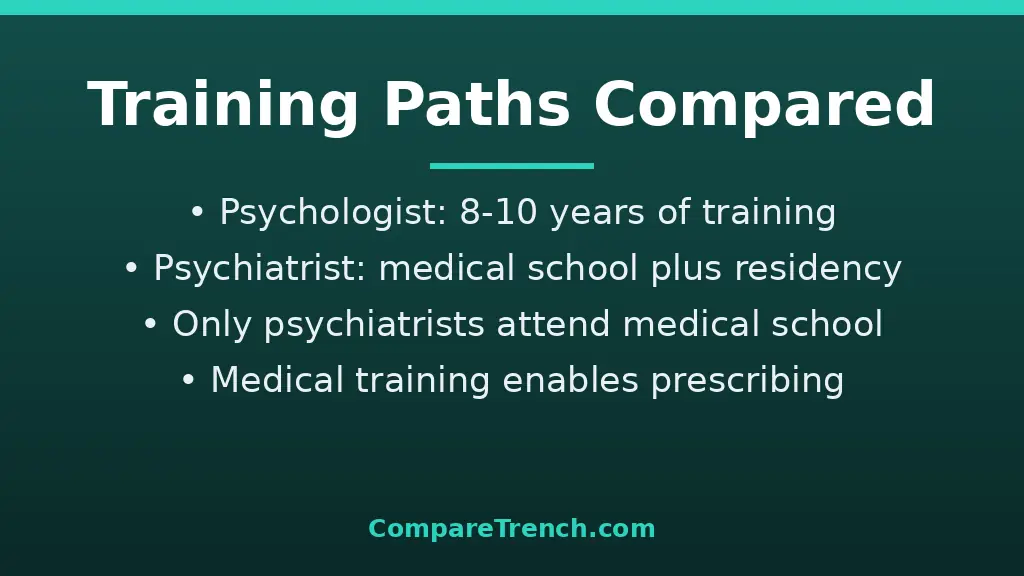
The training paths diverge early. A future psychologist studies psychology as an undergraduate, then spends 4–6 years in a doctoral program focused on therapy techniques, research, and psychological assessment, followed by a supervised internship. Total: roughly 8–10 years of higher education.
A future psychiatrist completes an undergraduate degree (often in a science), then four years of medical school covering the entire human body — anatomy, pharmacology, neurology — and then a four-year psychiatry residency treating patients under supervision. Total: roughly 12 years. This medical foundation is what lets psychiatrists treat mental illness as a medical condition, considering thyroid problems, vitamin deficiencies, or neurological disorders that can mimic psychiatric symptoms.
Treatment Approaches: Therapy vs Medication
Psychologists treat primarily through therapy. Talk therapy works by helping you recognize destructive patterns, develop coping strategies, and practice new behaviors. For conditions like mild-to-moderate anxiety, depression, PTSD, eating disorders, and relationship problems, psychotherapy alone is often highly effective — and research shows its benefits can last well after treatment ends.
Psychiatrists treat primarily through medicine and medical evaluation. Medication can correct chemical imbalances, stabilize mood, and reduce symptoms enough for therapy to work. For severe depression, bipolar disorder, schizophrenia, and OCD, medication is frequently essential. A psychiatrist evaluates whether your symptoms have a biological driver, rules out medical causes, and adjusts prescriptions as your body responds.
These approaches are not rivals. Studies consistently show that for many conditions, therapy plus medication outperforms either alone — which is why psychiatrists and psychologists frequently collaborate on the same patient’s care.
When to See a Psychologist
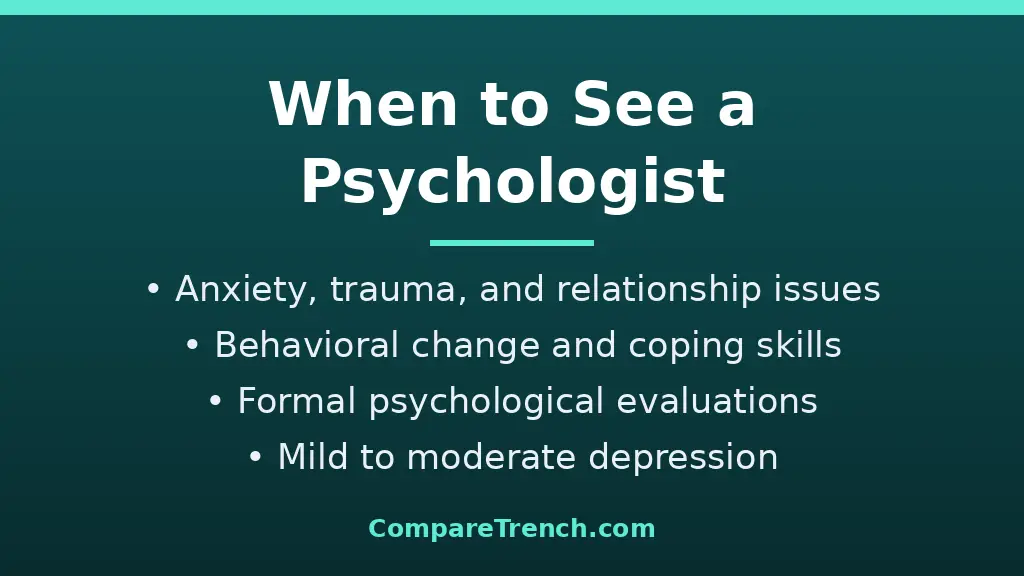
Consider a psychologist first when your main need is talking through problems and changing patterns:
- Anxiety, stress, or burnout that talk therapy can address
- Mild to moderate depression
- Trauma or PTSD (therapies like EMDR and trauma-focused CBT)
- Relationship, family, or parenting difficulties
- Behavioral issues: phobias, eating disorders, addiction counseling
- You want a formal psychological evaluation (ADHD, learning disorders, cognitive testing)
When to See a Psychiatrist
Consider a psychiatrist first when medication or medical evaluation may be needed:
- Symptoms are severe: suicidal thoughts, hallucinations, mania, or psychosis
- You have tried therapy alone without enough improvement
- A condition known to respond strongly to medication: bipolar disorder, schizophrenia, severe OCD
- You suspect a medical cause (thyroid issues, hormonal changes, neurological symptoms)
- You need a current prescription managed or adjusted
- A crisis requiring possible hospitalization
Many people start with whichever professional is available and get referred appropriately — a psychologist who notices symptoms that need medication will refer you to a psychiatrist, and vice versa. The American Psychological Association’s differences between psychology and psychiatry is a useful reference if you want to understand the psychologist’s role before booking.
How Psychologists and Psychiatrists Work Together
In practice, the two professions overlap constantly. A common arrangement: the psychiatrist handles diagnosis and prescribes medication with brief monthly check-ins, while the psychologist provides weekly therapy. They share notes (with your consent) so medication adjustments and therapy goals stay aligned. Integrated clinics, hospitals, and community mental health centers are built around exactly this teamwork.

Cost and Access Considerations
Psychiatry appointments are often harder to get and more expensive per visit, partly because there are fewer psychiatrists than psychologists in most regions. However, psychiatrist visits are typically shorter and less frequent. Therapy with a psychologist usually means weekly 45–60 minute sessions, which adds up — though many insurance plans cover both, and community clinics, university training programs, and telehealth services have expanded affordable access to each. When choosing, check what your insurance covers and whether the provider offers sliding-scale fees.
Common Myths About Psychologists and Psychiatrists
Myth: “Psychiatrists only prescribe pills and never listen.” While modern psychiatry does emphasize medication management, psychiatrists are trained in psychotherapy and take detailed histories. An initial psychiatric evaluation often runs 45–60 minutes and covers your symptoms, medical history, family history, and life circumstances before any prescription is written.
Myth: “Seeing a psychologist means just chatting.” Evidence-based psychotherapy is a structured treatment, not casual conversation. A psychologist sets treatment goals, uses tested techniques like CBT or exposure therapy, and measures your progress over time — much like a physical therapist follows a rehab plan rather than just chatting about your knee.
Myth: “Medication changes who you are.” Psychiatric medications aim to restore baseline functioning, not create a different personality. Many patients describe the effect as “feeling like myself again.” Side effects are real and should be discussed openly with the prescriber, but the medication itself does not rewrite your identity.
Myth: “You have to pick one or the other.” As noted above, combined care is common and often most effective. Starting with one professional does not lock you out of the other — referrals between psychologists and psychiatrists happen every day.
Which One Should You Choose?
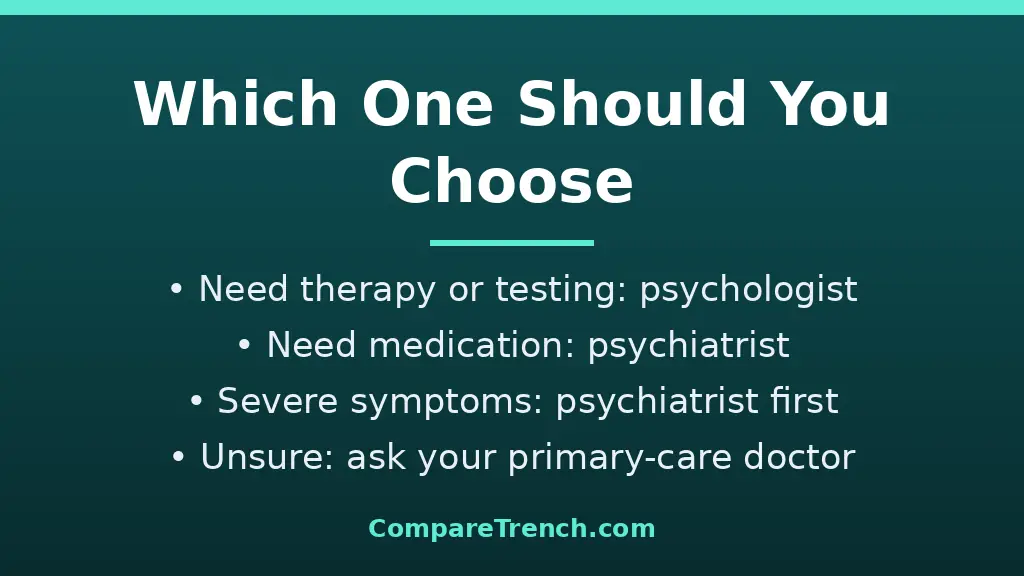
Choose a psychologist if you want to work through emotions, behaviors, or relationships with talk therapy, or you need psychological testing. Choose a psychiatrist if your symptoms are severe, you may need medication, or a medical evaluation is warranted. Choose both if you want the combination approach that research supports for many conditions — start with one, and let them refer you to the other. The most important factor is not the title on the door but finding a qualified professional you trust and feel comfortable talking to.
Frequently Asked Questions
Can a psychologist prescribe medication?
In most places, no. Psychologists are not medical doctors and do not have prescribing authority. A few US states and jurisdictions grant limited prescribing rights to specially trained psychologists, but this is the exception — normally, medication requires a psychiatrist or another physician.
Is a psychiatrist better than a psychologist?
Neither is better; they do different jobs. A psychiatrist’s medical training is essential when medication or medical diagnosis is needed, while a psychologist’s therapy expertise is often the better fit for behavioral and emotional work. Many treatment plans use both.
Do I need a referral to see a psychiatrist or psychologist?
It depends on your insurance and country. Many private practices accept self-referrals, while some insurance plans require a primary-care referral first. Psychologists in private practice can usually be booked directly.
Can a psychiatrist do therapy too?
Yes. Psychiatrists are trained in psychotherapy during residency, and some offer it as their main service. In practice, though, most modern psychiatrists focus on diagnosis and medication management, with therapy sessions that are shorter than a psychologist’s.
What is the difference between a psychologist, psychiatrist, and therapist?
“Therapist” is a general job description, not a protected title — psychologists, licensed counselors, and clinical social workers can all be therapists. Psychiatrist and psychologist are specific licensed professions with distinct training paths, as explained above.
Mental health connects to physical health in many ways, so it can help to understand related distinctions: the difference between viruses and bacteria for infections that affect wellbeing, the difference between arteries and veins and the difference between systolic and diastolic blood pressure readings your doctor may discuss, and the difference between DNA and RNA behind the biology of the brain, and the difference between syphilis and herpes — infections whose neurological effects a psychiatrist is trained to distinguish from primary mental illness.
Conclusion
The difference between a psychologist and a psychiatrist comes down to training and tools: psychiatrists are medical doctors who diagnose and treat with medication and medical procedures, while psychologists are doctoral-level experts who treat with psychotherapy and psychological testing. For therapy and behavioral change, see a psychologist; for medication, medical evaluation, or severe symptoms, see a psychiatrist; for many conditions, see both working as a team. If you are unsure where to begin, a primary-care doctor can assess your symptoms and point you toward the right specialist. Whichever you choose, taking the first step toward professional support is what matters most.